Author: stevek

  • How to Overcome Fear of AI and Build Trust in Finance Teams

    How to Introduce AI Into a Finance Department Without Losing Your Team

    Written by stevek in Business

    Introduction

    Three weeks ago, I wrote about overhauling a legacy B2B manufacturing sales team. That was the visible part of the transformation.

    The next stage proved much harder.

    As production, procurement, marketing and sales began working together, one thing became obvious.

    None of those improvements would deliver lasting results without a finance department capable of supporting a modern business.

    On paper, finance looked like the obvious place to start.

    In reality, it was the last place I wanted to begin.


    Why Finance Wasn’t the Problem

    The Finance Director had been with the company from the very beginning.

    He had built a loyal team who had seen the business through recessions, rapid growth and changing markets.

    Many consultants would have started by restructuring finance.

    I disagreed.

    By this stage we had already uncovered duplicated management roles, ageing machinery, inefficient production systems and constant disagreement between production, procurement and quality.

    Finance wasn’t creating those problems.

    Finance was simply trying to keep the business afloat while everyone else argued.

    That was my first turning point.


    The Meeting That Changed Everything

    The breakthrough didn’t happen in the boardroom.

    It happened on a golf course in the New Forest.

    Neither of us could claim to be much of a golfer, but spending a day away from the office proved invaluable.

    Between a questionable round of golf and a couple of single malts afterwards, we stopped talking about software and started talking about the business.

    For the first time, the Finance Director wasn’t defending existing systems.

    He was thinking about what the business could become.

    That conversation changed the entire project.

    The conversation took an unexpected turn.

    We spent surprisingly little time discussing the cost of new machinery, software or transport. Those were simply numbers.

    What weighed far more heavily on the Finance Director was the personal cost of the restructure.

    Not the redundancy packages.

    The people.

    Many had worked alongside him for decades. Somewhere along the way they had stopped being employees and had become friends.

    So I asked him one simple question.

    “Will you miss Margaret?”

    It was a deliberately cheeky question.

    Everyone in the office was terrified of Margaret.

    Without hesitation he replied, “Of course I will.”

    At that moment the conversation changed.

    He was no longer speaking as the Finance Director protecting a set of accounts.

    He was speaking as a leader carrying the weight of difficult decisions that affected people he genuinely cared about.

    That single answer changed the direction of our discussions.

    From then on, we stopped talking about what the business could afford.

    We started talking about what the business needed to become.

    Looking back, I don’t think AI transformed that company.

    Trust did.

    Once the Finance Director trusted that we weren’t trying to replace loyal people but give the business a sustainable future, he became the strongest advocate for change in the boardroom.


    The Questions That Changed the Conversation

    Rather than beginning with software demonstrations or AI presentations, I began with questions.

    What is the real purpose of a finance department?

    Is it there to process paperwork?

    Or is it there to help management make better decisions?


    Why are we spending so much time explaining last month instead of preparing for next month?

    Historical reports matter.

    But businesses succeed by making tomorrow’s decisions better than yesterday’s.


    Which finance tasks genuinely require experience?

    This wasn’t difficult to answer.

    Entering invoices.

    Reconciling paperwork.

    Routine administration.

    These are repetitive tasks.

    Protecting cash flow.

    Understanding margins.

    Supporting production and sales.

    Those are the jobs where experienced people add enormous value.


    If technology removed repetitive work, what would your finance team do with the time?

    This was the moment the atmosphere changed.

    Nobody talked about redundancies.

    Instead we discussed better forecasting.

    Better commercial decisions.

    More time supporting the rest of the business.

    The technology hadn’t become more impressive.

    The purpose had become clearer.


    Why AI Was the Right Tool—But Not the Starting Point

    I’m a strong supporter of AI.

    Used properly, it removes repetitive administration, improves visibility and gives experienced people more time to think.

    Used badly, it simply automates inefficient processes faster.

    For this client, AI was never the strategy.

    It was one of the tools that helped us deliver the strategy.

    The leadership came first.

    The software came second.


    The Three Principles I Took Away

    1. Win trust before introducing technology.

    People support change when they understand its purpose.


    2. Automate repetitive work, not experience.

    The objective isn’t replacing knowledge.

    It’s giving experienced people more opportunity to use it.


    3. Build one integrated business.

    Sales.

    Production.

    Procurement.

    Marketing.

    Finance.

    Each department succeeds when they stop working in isolation.


    Three Questions for the Week

    • Is your finance team helping shape the future or simply reporting the past?
    • Are your most experienced people spending enough time using their judgement?
    • When introducing AI, are you leading with technology or with trust?

    Frequently Asked Questions

    Should AI replace finance staff?

    No. In my experience, AI is most valuable when it removes repetitive administration and allows experienced people to concentrate on commercial decision-making.

    Where should a business start when introducing AI?

    Start with leadership and business processes. Technology should support a clear strategy, not become the strategy.

    Why do finance teams often resist change?

    In many established businesses they aren’t resisting technology—they’re protecting the people, systems and financial discipline that have kept the company alive for years.


    Next Week

    We’ve now looked at sales, production and finance.

    Next Monday, I’ll explain how we brought everything together using an executive dashboard that gave directors an honest picture of the business in under five minutes

  • Style, Identity, Summer Drinks: 3 Questions for the Weekend

    Style, Identity, Summer Drinks: 3 Questions for the Weekend

    My Weekend 3 Questions

    Time seems to be speeding by.

    Having launched Ropho back in mid-January, I wanted to take a moment this weekend to revisit a couple of my early subjects.

    Both feel incredibly relevant right now, especially as we head into the summer season.

    Here are my three questions for you this weekend:

    1. What does style mean to you in your sixties?

    I wrote a post early on about how our younger years shape our identity, and why attitude matters more than age.

    Style isn’t just about the clothes you wear or how much you spend.

    It’s not even just about hair—which is a conversation in itself! As someone who is follicly challenged, I know it changes for us men, but I also listen to my wife, her friends, and our daughters constantly discussing it.

    Our daughter Rachel, whose hair fell out during chemo, has recently ditched the wigs as it slowly grows back. She is entirely embracing a short, funky look, and she looks fantastic.

    True style is about inner confidence, posture, and movement.

    Last week was incredibly busy, and right after a great time at Royal Ascot, I was invited to speak at a private, relatively exclusive conference.

    The room was filled with highly successful, established manufacturing entrepreneurs and their partners—people who, by any traditional metric, have reached the top of their game.

    Yet, as I looked around, what fascinated me wasn’t the business success. It was the sheer variety of styles on display.

    Some men and women looked entirely comfortable in their own skin, while others seemed to be quietly retreating into safe, neutral choices.

    It got me thinking: What does style mean to you at this stage of life? Are you dressing for yourself, or what’s “safe”? 👉 Style Over 60: Read the original style post here

    2. How do you view your own identity right now?

    This leads nicely into my second question, which goes a bit deeper into how the world sees us versus how we see ourselves.

    How do we balance the many overlapping challenges we face—supporting family, navigating work, or considering retirement?

    This was the focus of one of my most highly engaged early articles, The Over-60 Paradox.

    It’s about how we can be the absolute stabilising force for multiple generations, yet still struggle to find time for our own future chapters.

    So, my second question: How do you balance being there for everyone else without losing sight of your own identity and purpose? 👉 Read the Over-60 Paradox post here

    3. What’s your go-to summer drink?

    As many of you know, I love a good single malt or a glass of red wine. However, in this scorching summer heat, a heavy whiskey by the BBQ doesn’t quite hit the mark.

    My third question is purely practical: What are your favorite, affordable UK alcoholic drinks for social events and summer BBQs?

    I’m looking for something refreshing that beats the heat without breaking the bank.

    Over to You…

    I’d genuinely love to hear your thoughts on any (or all) of these three questions in the comments below. Let’s start a conversation.

    Have a great weekend, [Steve/Ropho]

  • Strength Training in Your 60s: Stay Strong & Mobile | Ropho

    Finding the Rhythm: High Heat, Solid Habits, and Staying Strong

    Finding the Rhythm: High Heat, Solid Habits, and Staying Strong

    After the high energy of last week—filled with weekend breaks, large meals, refreshments, and the spectacular buzz of Royal Ascot—it is Wednesday already.

    We are midway through the week, and the headline everywhere is the weather.

    It is typically British.

    We aren’t talking about the resignation of the Prime Minister or England’s dismal attempt at breaking down the Ghana defence.

    It’s all about the weather: “It is an absolute scorcher out there, with forecasts predicting record-breaking temperatures of up to 34°C.”

    Looking back at Monday and Tuesday, which were packed with client visits, I have never been more thankful for efficient car air conditioning!

    Today, the alarm went off at 6:00 AM. In weather like this, getting an early start is the only way to beat the heat.

    My plan for the morning is to proofread today’s article, which focuses heavily on a concept I live by: the 1-Hour Rule.

    Today’s focus is all about leverage—spending one dedicated hour on website maintenance and upgrades, another protected hour on the marketing strategy for Ropho, and a final hour locked in for strength training.

    The Reality of Fitness in Your 60s

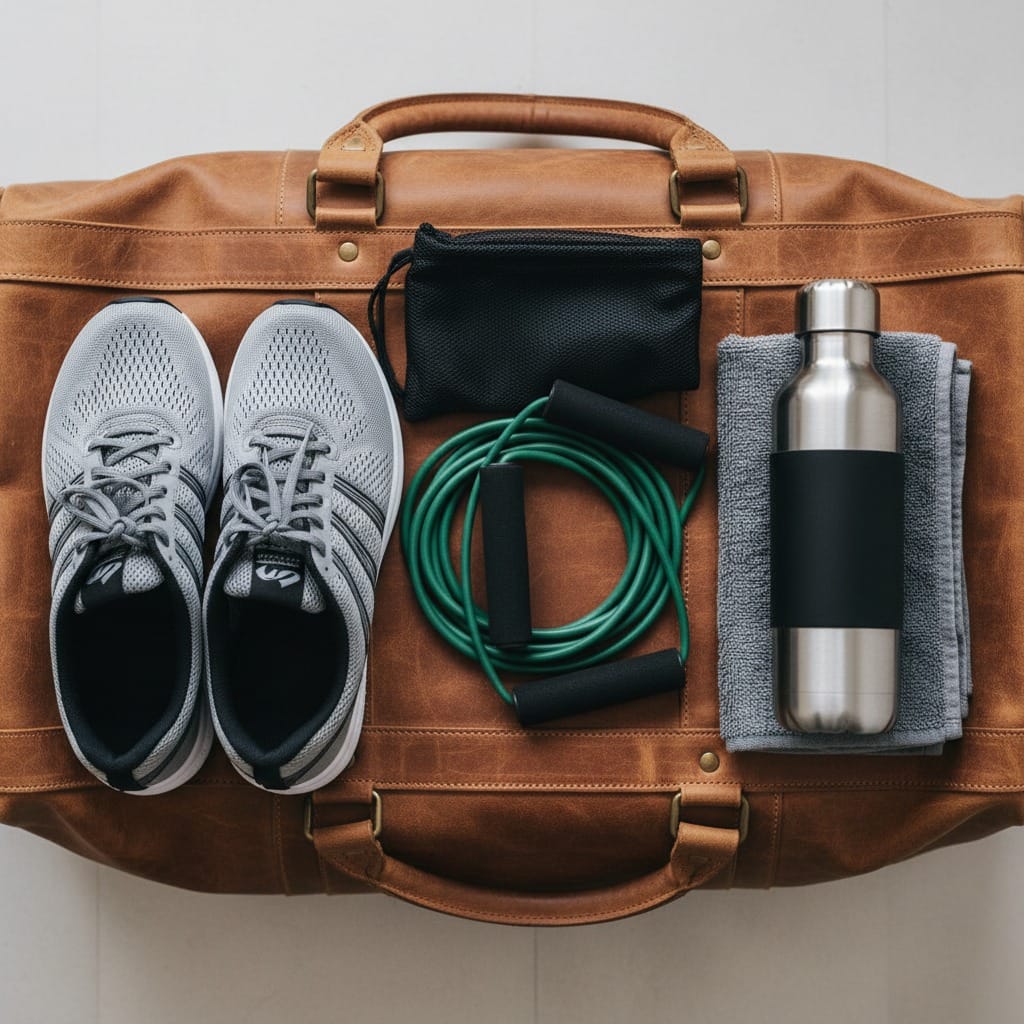
    Movement and exercise are non-negotiable in our sixties if we want to live an active, fulfilling life. I aim for two to three targeted sessions a week, keeping my routines completely flexible so they adapt to my body and my lifestyle—not the other way around.

    Today’s session is a full-body workout using resistance bands and dumbbells. Here is exactly what the routine looks like:

    • Warm-up: 5 to 10 minutes of light movement to get the blood flowing.
    • Legs: Goblet squats (using a dumbbell) and calf raises.
    • Chest & Back: Resistance band chest presses (with handles) and single-arm bent-over rows.
    • Shoulders: Lateral raises using either bands or dumbbells.
    • Arms: Tricep push-downs (with the band anchored above the door frame) and bicep curls.
    • Cool-down: A dedicated stretching routine to lock in mobility.

    I typically run through 2 to 3 sets of 8 to 15 repetitions for each exercise.

    Crucially, I always log my weights and sets.

    In your sixties, the goal changes: I am realistically trying to maintain muscle mass, improve joint health, and keep strong for everyday tasks, coordination, and future travel.

    That said, I have to keep a sense of humour about it.

    I always joke with my son that my joints hold a daily morning meeting just to decide which one of them is going to hurt the most as I “bound” (joking!) out of bed.

    Aside from the weights, I make sure to get a walk in most days—and on a day like today, hydration is the absolute priority.

    Cooling Down & Keeping Motivated

    With the heatwave peaking tonight, dinner needs to be light, fresh, and effortless. Tonight’s menu is a King Prawn and Avocado Salad served with new potatoes.

    Prawns are an excellent, lean source of protein that won’t leave you feeling heavy when the ambient temperature is hitting the mid-thirties.

    If you are struggling to find momentum in this heat today, I’ll leave you with today’s motivational phrase:

    “Just start. Even when you don’t feel like it.”

    Once you take that first step, the routine takes over. Stay cool, stay hydrated, and make the mid-week count.

    Frequently Asked Questions: Staying Strong in Your 60s

    Q: Why is strength training suddenly so important after age 60?

    A: Around our sixties, the body accelerates its natural rate of muscle loss (a process called sarcopenia) if left unchecked.

    Strength training acts as a proactive defense mechanism.

    By lifting weights or using resistance bands two to three times a week, you aren’t just building vanity muscle—you are actively preserving the physical independence, balance, and metabolic health required to live a vibrant lifestyle.

    Q: Can resistance bands really replace heavy weights for maintaining muscle?

    A: Absolutely. Resistance bands provide constant tension throughout an exercise, which heavily stimulates muscle fibers while being exceptionally gentle on aging joints.

    They are highly adaptable, lightweight enough for travel, and can easily be anchored to mimic complex gym machinery right at home.

    Q: How often should I lift weights or use bands to see results?

    A: Consistency beats intensity every time.

    Aiming for two to three full-body sessions per week is the sweet spot.

    This frequency provides your muscles with enough stimulus to maintain mass and strength while allowing your joints and nervous system plenty of time to recover between workouts.

    Q: What should I do if my joints are stiff or sore in the morning?

    A: Mild morning stiffness can be a normal part of the aging process, but movement is actually the solution, not the enemy.

    Never jump straight into a workout cold. Always dedicate 5 to 10 minutes to a dynamic warm-up—like marching in place or arm circles—to lubricate the joints with synovial fluid before introducing any extra resistance.

    Important Lifestyle & Health Disclaimer

    The Ropho Active Living Framework Notice: The information, routines, and fitness insights shared across the Ropho platform are intended for educational, motivational, and entertainment purposes only. We believe passionately in the power of movement to transform your sixties, but we are business advisors and lifestyle advocates, not medical professionals. Every individual body possesses its own unique history and physical limits. Before starting any new exercise regimen, resistance circuit, or dietary change, you should always consult your general practitioner or a qualified healthcare professional. Always listen to your body, prioritize proper form over heavy resistance, and stop immediately if you experience sharp pain or discomfort.

    Ready to Take the First Step?

    Don’t let the heatwave—or a busy schedule—compromise your mobility and strength.

    If you want to keep your joints healthy, maintain vital muscle mass, and protect your physical independence, consistency is everything.

    To make it completely effortless for you to build this habit, I’ve packaged my exact morning routine into a clean, easy-to-follow guide: The Ropho Active Series — Workout 01: The “Beat the Heat” Circuit.

    What’s Inside Your Free PDF:

    • Step-by-Step Instructions: Clear, logo-free guidance for every dumbbell and resistance band exercise.
    • Printable 4-Week Progress Tracker: A dedicated log sheet so you can track your sets, weights, and consistency week over week.
    • Total Flexibility: A routine specifically designed to adapt to your body and your busy lifestyle.

    👉 [Click Here to Leave Your Email for the Free 4-Week Workout Guide & Progress Tracker PDF]

    No more overthinking. Just start today—your future self will thank you for it.

  • Struggling with Time? Try the 1 Hour Rule for your Business

    Struggling with Time? Try the 1-Hour Rule for Business Owners

    Time Management – What 40 Years Taught Me (And Why 3 Hours a Week Is Enough)

    Time management is one of my favourite subjects and one of those we all think we understand.

    Until we actually look at how we spend our days.

    Time management for small business owners doesn’t require drastic change.

    A simple approach—spending one focused hour on business development three times a week—can significantly improve productivity, reduce stress, and create consistent growth.

    In my case, that wake-up moment came years ago when I was working for a well-known German engineering company.

    I was in sales management for control and automation systems, and I was seconded into a six‑month time and motion study.

    Not on manufacturing. On people like us. Sales engineers, Middle Managers, and busy professionals across three subsidiaries.

    What we discovered back then still applies today—perhaps even more now, in the age of CRM systems, apps, and AI.

    Most people don’t have a time problem; what they have is a focus problem.

    What We Learned (That Still Holds True Today)

    Having worked as a sales engineer, it is amazing how easily you get sidetracked.

    Maybe you try selling your product on the phone instead of just closing the meeting date.

    During the study, we followed how sales engineers actually worked:

    • How they planned (or didn’t plan) their days.
    • How they arranged appointments and routes.
    • How much time was reactive vs. proactive.

    And despite all the tools available today, one thing hasn’t changed:

    👉 The day fills up with “stuff” unless you deliberately take control of it.

    Which brings me to something I still share with small business owners today.

    The “Business Fitness” Rule

    If you remember one thing from this post, make it this:

    👉 1 hour a day, 3 times a week. That’s enough to change everything.

    You don’t need more time. You need protected time. And each of those hours has a purpose.

    1 Hour for the Business (Stepping Off the Treadmill)

    This is where most people struggle. You’re busy all day… but rarely moving forward. This hour is different:

    • No emails.
    • No firefighting.
    • No “just quickly doing this first.”

    This is pure, proactive time:

    • Following up warm leads.
    • Reconnecting with existing contacts.
    • Chasing quotes properly.
    • Sending thoughtful, personal messages.

    This is the difference between running a business and building one.

    Most people never protect this time… which is exactly why it works when you do.

    1 Hour for the Body (Staying Fit Enough to Keep Going)

    This part is just as important—especially for those of us in our 50s, 60s, and beyond.

    You don’t need extreme workouts. You need consistency:

    • A brisk walk.
    • Light exercise or resistance work.
    • Anything that gets you away from the desk.

    Because:

    👉 A tired, stiff, distracted business owner makes poor decisions. No strategy can fix low energy.

    Why Three Times a Week Is Enough

    You don’t get fit from one heroic workout, and you don’t improve a business in one burst of motivation. You improve through consistency.

    Three hours a week of business focus:

    • Stops opportunities slipping through the cracks.
    • Builds relationships before price is even discussed.
    • Creates momentum instead of panic.

    Three hours a week of movement:

    • Improves energy.
    • Sharpens thinking.
    • Makes everything else easier to handle.

    It’s Rarely About Price

    When we lose a deal, we often say, “They wanted it cheaper.”

    That’s usually the easy explanation. In reality, it’s more often about trust, timing, or clarity.

    Here’s a simple habit to build into your business hour:

    👉 Ask: “What would I need to change to win your business in the future?”

    The answers are rarely about price; they usually surface because you haven’t built enough value into your quotation. These answers are incredibly valuable.

    A Simple Framework for Better Time Use

    If you struggle with time management, keep it simple. Use the Four D’s:

    • Do: If it matters and is urgent, do it right away.
    • Delegate: If someone else can do it, hand it over or automate it.
    • Defer: If it’s important but not pressing, schedule it properly in your diary.
    • Delete: If it adds no value to your goals, get rid of it.

    Or, if you prefer structure, use the Eisenhower Matrix:

    • Urgent & important
    • Important, not urgent
    • Urgent, not important
    • Neither

    But remember:

    👉 Tools don’t fix time management. Decisions do.

    Frequently Asked Questions: Time Management for Small Business Owners

    Q: How much time should I spend on business development each week?

    A: You don’t need huge blocks of time. Just 3 focused hours a week—spread over a few sessions—can make a noticeable difference when used for proactive tasks like follow-ups, relationship building, and planning.

    Q: Why do small business owners struggle with time management?

    A: Most owners get trapped in day-to-day operations and constant “firefighting.” Without protected time to step back and work on the business, important growth activities are often delayed or ignored.

    Q: What is the simplest way to improve time management?

    A: Start by protecting small blocks of time. The 1-hour rule—setting aside one uninterrupted hour, three times a week—is simple, realistic, and highly effective.

    Q: Is time management different for people over 60?

    A: The core principles are the same, but priorities often shift. Energy, focus, and lifestyle balance become more critical, which makes structured, realistic approaches like the 1-hour rule even more valuable.

    Q: What’s the biggest mistake people make with time management?

    A: Trying to do too much at once. Real improvement comes from consistent, daily or weekly habits, not occasional bursts of massive effort.

    Final Thought

    If there’s one thing I’d suggest this week, it’s this:

    👉 Block out just one hour in your diary.

    Not for emails. Not for admin. For your business. Do it three times this week and see what changes.

    Because after all the tools, systems, and advice over the years… it usually comes down to this: small, consistent actions—done deliberately—make the biggest difference.

    Ropho – Practical business thinking for people who value experience over noise.

  • Bath,Ascot and Sex: The Reality of Life in Your 60’s

    Bath,Ascot and Sex: The Reality of Life in Your 60's

    What a week. If anyone ever tells you life slows down after sixty, show them my diary.

    It kicked off last Friday with a fantastic, high-level business meeting in Bath.

    What an amazing city, It moves at a completely different pace compared to the frantic rush of London, Paris, Manchester, or Birmingham.

    The Georgian architecture, the history, the ancient stone—it completely sets the scene, especially when paired with a vibrant, modern mix of independent bars and restaurants.

    From the architectural serenity of Somerset, it was straight into a very different kind of British institution on Thursday – Royal Ascot.

    Nobody puts on a traditional spectacle quite like the British, and Ascot is the perfect example.

    From the elegance of the Royal Procession to the roar of the enclosures.

    You see every single strand of British life on display.

    The uber-successful, old money, the desperate gambler, and, of course, groups of ladies definitely on a mission to have fun.

    It is people-watching at its absolute finest.

    Add in a beautiful weekend to recharge the batteries, and England winning their opening match of the World Cup on Wednesday.

    It should have been a flawless week.

    But this whirlwind week got me thinking about three massive questions that define our culture, our future, and our personal lives today.

    1. Does the UK Have Luxury Weekend Breaks That Match Our European Counterparts?

    I am often asked by clients and friends about classic continental city breaks—Vienna, Geneva, Rome, or Paris.

    They are spectacular, of course.

    But this trip to Bath reminded me that we are incredibly lucky right on our own doorstep.

    When you look at the sheer historic depth, luxury boutiques, and high-end culinary scenes of Bath, York, or Edinburgh, the UK absolutely competes with the best of Europe.

    The difference isn’t the quality; it’s the vibe.

    A British luxury weekend offers a distinct, slower-paced elegance, an understated heritage charm that European hubs often replace with pure, high-octane tourism.

    We don’t need to cross the Channel to find world-class luxury; we just need to appreciate what’s in our own backyard.

    A guide to luxury boutique hotels in Bath, York and Edinburgh

    Want to discover the best of British luxury?

    Drop your email below to receive our exclusive, complimentary guide:

    The Heritage Capitals: A Definitive Guide to Exceptional Boutique Luxury in Bath, Edinburgh & York.

    2. We Put On the Best Shows on Earth—So Why Do the British Rarely Win the Big Competitions?

    Watching the masterclass of tradition at Ascot, preceeded by the national collective breath-holding for the England match, highlights a bizarre British paradox.

    We are arguably the best nation on earth at staging events.

    Our infrastructure, our pageantry, and our passion are unmatched.

    Yet, when it comes to lifting the biggest trophies on the world stage, we so often choke at the final hurdle.

    Is it a mentality thing?

    Absolutely. In Britain, we have a cultural habit of romanticising the “gallant loser.

    ” We love the drama of near-greatness.

    True winning machines—like the Germans, Australians, or Americans—possess a ruthless, clinical mindset that prioritises execution over emotion.

    We excel at the party, but we often freeze under the pressure of ultimate victory because we are too busy managing the weight of expectation.

    That fear of pushing past the finish line seems to be trickling down into business, too.

    Aspiration isn’t a dirty word; it’s the engine of progress, and it’s something we need to actively reinstill in the younger generations entering the workforce today.

    3. Why Are Relationships So Much More Important in Your Sixties?

    Which brings me to the core of what really matters.

    When you’re in your twenties and thirties, relationships are often built around building—building careers, buying houses, raising children, and surviving the daily grind.

    You are a team fighting the logistics of life.

    But by the time you reach your sixties, the landscape changes.

    The noise begins to quiet down. The nest empties, businesses mature, and you are suddenly left looking across the table at each other.

    This is the decade where relationships cease to be about project management and become entirely about shared experience and deep companionship.

    In your sixties, a great relationship is your ultimate anchor.

    It gives you the freedom to chase big business goals or travel the world, knowing you have an absolute bedrock of support waiting for you.

    We have more time, more wisdom, and fewer distractions.

    If you don’t nurture the relationship now, you risk sitting in the most beautiful hotel room in the world with absolutely nothing to say to each other.

    It is the single most valuable asset you will ever own.

    The Reality of “Mismatched Energy”

    Of course, knowing how important a relationship is doesn’t mean it’s always plain sailing, which brings me back to a question people think about constantly but rarely discuss openly.

    Is sex still important in your sixties?

    The short answer is yes, absolutely.

    But the reality of timing it when you are both living full, high-performing lives is another story entirely.

    Take Friday night in Bath. I arrived at dinner buzzing on pure business adrenaline from a successful meeting, fueled by a little too much good wine with clients.

    Sharon, on the other hand, had just spent a blissful, quiet day decompressing at a spa.

    Our energies were in completely different postcodes. I was revved up; she was completely reset.

    By Thursday at Ascot, the tables completely turned. Ensconced in an exclusive hotel after Ladies Day, Sharon had enjoyed a steady stream of champagne and high-energy socialising while I’d spent the afternoon networking, working the room, and tracking the racing.

    Once again, one of us was ready to conquer the world, and the other was ready for sleep.

    It begs the question: how do you keep the spark alive when your batteries are rarely charged at the exact same time?

    Age doesn’t kill intimacy—but the mismatched pace of modern life can certainly throw a spanner in the works.

    Next week, we’re diving straight into the reality of intimacy, managing energy levels, and maintaining genuine connection when you’ve hit your prime. Don’t miss it.

  • Summer Safety Guide After 60: Travel, Crowded Events & Cyber Security

    Keeping Online, Travel, and Ascot Safe for the Summer After 60
    “Royal Ascot isn’t just about horse racing. It’s about tradition, optimism, conversation, and taking time to enjoy a summer day.”

    Keeping Online, Travel, and Ascot Safe for the Summer After 60

    We have been very luckily VIP-invited to Royal Ascot tomorrow—specifically for Ladies Day.

    It is truly one of the most magnificent, traditional British sporting events, standing proudly alongside a Lord’s Test and the iconic strawberries and cream of Wimbledon.

    With the summer season now in full swing, and a number of UK breaks and holidays booked (and more being booked!), safety and comfort have rapidly become my number one consideration.

    When we are caught up in the excitement of a high-profile event or planning a summer getaway, it’s remarkably easy to let our guard down.

    Navigating major events and travel after 60 requires a bit of tactical preparation—not to dampen the fun, but to protect it.

    The Big Event: Staying Secure in Crowded Spaces

    Before we look at the broader holiday checklist, high-profile summer events like Ascot require a specific mindset:

    • Beware the “Live” Posting Trap: Take as many photos as your battery allows in the Royal Enclosure, but keep them in your gallery until you are safely back home. Checking in at a major event publicly broadcasts a clear message: My house is currently empty.
    • Guard Your Tech & Data: Keep phones and wallets in zipped inside pockets. Avoid logging into bank accounts or typing sensitive passwords while connected to the free public Wi-Fi at train stations or racecourses—stick to your mobile data (4G/5G) for security.

    The Golden Eight: My Essential Summer Travel Manifesto

    The Golden Eight: My Essential Summer Travel Manifesto

    Whether you are heading down the road for a British countryside break or boarding a flight, these eight rules ensure your trip stays memorable for all the right reasons.

    1. Comfort Over Chaos

    Direct flights are your friend. Choose accessible accommodation and research your arrival transfers in advance.

    Don’t be heroic: use a taxi for that “last mile” rather than struggling with heavy luggage on a long walk. Conserve your energy for the sights, not the transit.

    2. Insurance That Actually Covers You

    Don’t just tick the cheapest box on a comparison site. Ensure your policy fully covers any pre-existing conditions and medical emergencies. In your 60s, “Comprehensive” is the only word that matters.

    3. Documentation & Digital Backups

    Check that your passport has at least 6 months of validity remaining and secure any necessary visas early.

    Pro Tip: Take a clear photo of your passport, driving licence, and insurance policy on your phone and email them to yourself. If the paperwork goes missing, that digital copy is your lifeline.

    4. The “Medication Plus” Rule

    See your GP early for a quick check-up and any required vaccinations. Always carry your medication in your hand luggage in its original packaging. Crucially, bring enough for the trip plus an extra 5 days just in case of unexpected travel delays.

    5. Tech & Roaming Setup

    Avoid the dreaded “bill shock” when you return home. Check your mobile provider’s international roaming fees before you cross a border, or look into a digital eSIM data plan for seamless, cost-effective connectivity.

    6. Respect the Sun

    The spring and summer sun in the Mediterranean or Southeast Asia is a completely different beast. Plan your days around finding shade, factor in midday rests, and drink double the hydration you think you need.

    7. Smart Cards & Local Cash

    Use no-fee travel cards (like Monzo or Starling) to avoid conversion rates that amount to daylight robbery.

    However, don’t rely entirely on plastic—always carry a small amount of local cash for those hidden-gem cafes and markets that don’t take cards.

    8. Walking Shoes Over Fashion

    I am all for style, but for a classic city break, blister pain ruins a day faster than anything else.

    Invest in high-quality, supportive footwear that handles miles of concrete. Your feet will thank you when you sit down for dinner.

    The Digital Shield: 10 Rules to Outsmart the Scammers

    Of course, staying safe isn’t just about watching your pockets while traveling; it’s about protecting your digital footprint.

    Scammers love the summer season, often targeting us with fake booking confirmations, urgent bank alerts, or lookalike websites.

    Here is your digital checklist to keep the fraudsters at bay:

    1. Slow Everything Down

    Scams rely entirely on urgency. Messages shouting “Account locked,” “Immediate action required,” or “Fine outstanding” are designed to trigger panic. That pressure is a trap. The safest first step is always to pause. If a message pushes you to act now, question why.

    2. Never Click Links in Unexpected Messages

    Links in texts or emails can lead to highly convincing “cloned” websites designed to steal your credentials.

    If a bank, courier, or travel company contacts you unexpectedly, do not click the link. Open your browser and go to the official website independently.

    3. Go to the Company Directly

    Never use the phone number, link, or email provided in a suspicious message.

    If you want to check if an alert is genuine, use the trusted number on the back of your bank card or a recent paper statement. One quick, independent call can save a massive amount of heartache.

    4. Use Strong, Unique Passwords

    Using the same password across multiple sites is like using one single key for your house, car, and office—if a criminal gets hold of one, they get them all.

    Consider using a secure Password Manager to generate and safely store unique passwords for every account.

    5. Turn on Two-Step Verification (2SV)

    Most UK banks, email providers, and social media platforms now offer this feature.

    It simply sends a quick code to your phone or app when you log in from a new device. It’s a tiny extra step that acts as a massive deadbolt on your digital door.

    6. Be Wary of “Guaranteed” Investments

    Fraudsters frequently impersonate financial advisers, reputable companies, or celebrities online. In the UK, always check the Financial Conduct Authority (FCA) Register before moving any money. If an opportunity promises high returns with “no risk,” it is a major red flag.

    7. “Too Good to Be True” is a Warning

    Massive, unrealistic holiday discounts or miracle financial offers are engineered to make you act before you think.

    Trust that inner voice—if a deal feels too good to be true, it almost certainly is.

    8. Keep Your Devices Updated

    Those annoying “Update Now” notifications on your phone, tablet, or laptop? Think of them as essential digital maintenance.

    They rarely just add features; they almost always contain critical security patches designed to block the latest viruses and vulnerabilities.

    9. Fight Back and Report Suspicious Messages

    In the UK, we don’t just have to take it on the chin; we can actively fight back. Forward scam texts to 7726 (which handily spells ‘SPAM’ on a telephone keypad) and forward suspicious emails to report@phishing.gov.uk. It directly helps the authorities track down and shut these operations down.

    10. When in Doubt, Ask Someone

    A second opinion is a scammer’s absolute worst enemy. Scammers isolate you by demanding secrecy and immediate compliance. A quick, grounded chat with a partner, friend, or colleague can reveal an online trick instantly.

    The Bottom Line: Preparation shouldn’t feel like a chore.

    Spending just a bit of time setting up your digital boundaries, checking your gear, and securing your plans ensures that the only thing you have to focus on tomorrow is enjoying the world-class racing, the fashion, and the unbeatable British summer atmosphere.

    Have a fantastic summer, stay sharp, and enjoy every minute of the sunshine!

WordPress Cookie Plugin by Real Cookie Banner