
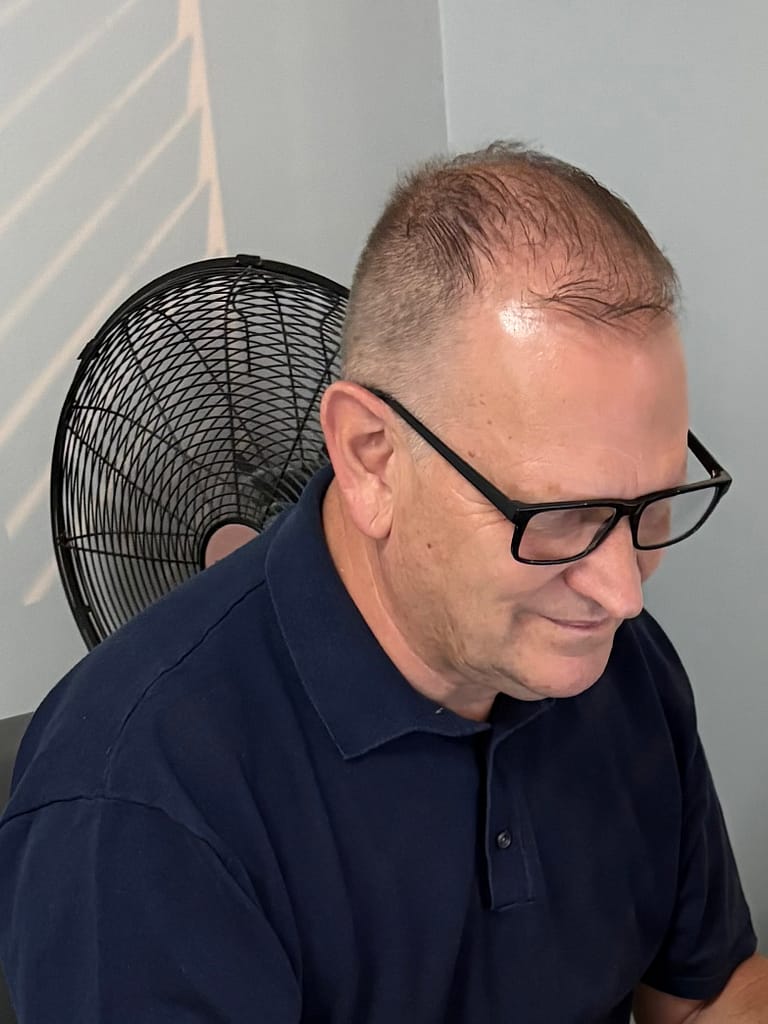
This week’s midweek conversation started with a question from Sharon about my pension.
It made me think rather differently about taking tax-free cash, funding Ropho and, perhaps most importantly, what happens to the money if I’m not here to use it.
Sometimes the best financial conversations start at the kitchen table — or in my case, probably in front of this laptop.
What would you do?
Our midweek conversations alternate between health and fitness and personal finance.
This week’s conversation started, as some of the more interesting ones do, with Sharon.
I’ve talked before about changing direction with my working life. I’m winding down the consultancy over the next six months and putting much more of my time and energy into Ropho.
What started as a bit of a hobby is becoming something I want to turn into a viable business.
Sharon isn’t convinced I always think these things through quite as thoroughly as I think I do.
She started asking questions.
How are you going to fund the change when the consultancy income eventually disappears?
Fair question.
I told her I would probably take a lump sum from my pension and that I’m also building products through Ropho that, hopefully, will eventually generate an income.
Then came the question I hadn’t really thought about.
“And what happens if you die before Ropho makes any money?”
I laughed.
Then she added:
“Who gets your pension?”
It was one of those very simple questions that suddenly makes you stop and think.
And that’s how this week’s personal finance conversation came about.
What happens to your pension if you die?
I’ve always thought of my pension primarily as something that would provide an income for me in later life.
But a pension is also an asset.
And depending on the type of pension you have, what happens to it when you die can be complicated.
There are different rules depending on the type of pension, your age when you die, how much you’ve already taken and who your beneficiaries are.
There are also changes coming in April 2027 that make the subject even more interesting.
From 6 April 2027, most unused pension funds and pension death benefits are due to come into the scope of Inheritance Tax. There are exemptions and specific rules, so this isn’t as simple as saying every pension will suddenly be taxed.
So Sharon’s question was actually rather more important than I initially thought.
It also made me look at another question.
Should I really be taking a large chunk of my pension out to help fund the next stage of my working life?
The attraction of the 25%
One of the big attractions of a pension is the ability to take part of it as tax-free cash.
Under the current rules, you can usually take up to 25% of your pension as a tax-free lump sum.
For most people, the standard maximum tax-free amount across their pensions is £268,275 in the 2026/27 tax year. There can be exceptions for people with certain protected allowances.
So, for example, if you had a pension worth £200,000, you could normally take £50,000 as tax-free cash.
That sounds very attractive.
And if you’re approaching retirement with a mortgage to clear, a business to start, children to help or simply things you want to do while you’re fit and healthy enough to enjoy them, I can understand why taking some of that money is tempting.
But there is an important distinction.
Tax-free doesn’t necessarily mean financially free.
Once money leaves your pension, it is no longer sitting inside that pension and potentially benefiting from investment growth.
And if you spend it, it’s obviously no longer available to provide an income later.
That’s where the decisions become more complicated.
Five things I’m thinking about
1. What could that money have become?
The first thing is investment growth.
Take £50,000 out of a pension and you have £50,000 in your hands.
But leave it invested for another ten years and, depending on investment performance, it could potentially become considerably more.
Of course, investments can fall as well as rise, and nobody knows what future returns will be.
But taking money out means giving up the opportunity for that money to continue working inside your pension.
That’s something I need to consider carefully.
2. Tax-free cash isn’t the same as a tax-free pension
This is an easy one to misunderstand.
You can normally take up to 25% as tax-free cash, but the remaining pension withdrawals are generally taxable as income.
And taking a large taxable withdrawal in one go can potentially push you into a higher tax band.
Sometimes taking less money and spreading withdrawals over different tax years can produce a very different tax bill.
The tax treatment will depend on your individual circumstances and other income, so this isn’t something I’d make a decision about based on a simple online calculation.
3. You need to understand the MPAA
This is one I hadn’t appreciated properly before doing the research.
If you flexibly access taxable income from a defined contribution pension, you can trigger the Money Purchase Annual Allowance, or MPAA.
For 2026/27, that allowance is £10,000.
Importantly, simply taking your pension commencement lump sum — the tax-free cash — does not by itself trigger the MPAA.
But accessing taxable income flexibly can.
That’s potentially important if you’re still working and continuing to pay into a pension.
Another reason not to simply take money out without understanding exactly what you’re doing.
4. Taking money out can change what happens to it later
Money inside a pension and money sitting in your bank account aren’t necessarily treated in the same way.
Once you’ve withdrawn a large lump sum, it becomes part of your wider financial assets.
That can have implications depending on your circumstances, including means-tested support and potentially future care costs.
And with the planned changes to Inheritance Tax treatment of unused pension funds from April 2027, the question of whether to leave money inside a pension or withdraw it becomes even more interesting.
This isn’t an argument for leaving everything in your pension.
It’s an argument for understanding the consequences before you move it.
5. Don’t forget what the money was supposed to do
Perhaps the biggest trap of all is simply spending it because it’s there.
A pension is supposed to help fund the rest of your life.
And none of us knows how long that life will be.
At 64, I certainly don’t want to spend the next twenty years looking backwards thinking that I should have kept more money invested.
But I also don’t want to spend the next twenty years being afraid to use money I’ve spent decades saving.
And therein lies the problem.
So what am I going to do?
This is where Sharon’s original question comes back.
I’m considering using some of my pension to help fund the next stage of my working life.
I don’t see that as raiding my retirement fund to pay for a hobby.
I’m making a conscious decision to invest some of my own money into something I believe could become a business.
But I also need to be honest with myself.
Ropho might succeed.
It might take longer than I expect.
It might never produce the income I hope it will.
And that’s why taking money from a pension isn’t a decision I should make simply because the money is available.
I need to look at the whole picture.
How much income will I need?
What other income will I have?
How much can I afford to take?
What happens to the money if I don’t take it?
And, perhaps most importantly after my conversation with Sharon:
What happens to it if I’m not here to use it?
That last question probably deserves more thought than I’ve given it.
Want to know more?
Pension rules can be complicated and everyone’s circumstances are different. I’ve done the research for this conversation, but I’m certainly not suggesting that what is right for me will be right for anyone else.
If this conversation has made you think about your own pension, there are some useful places to start.
GOV.UK has the official information on pension tax, including the current Lump Sum Allowance.
MoneyHelper provides free, impartial guidance on taking your pension and the different options available.
Pension Wise, provided through MoneyHelper, offers free, impartial guidance for eligible people aged 50 and over with UK-based defined contribution pensions.
And if you decide you need personal financial advice, MoneyHelper recommends using a financial adviser regulated by the Financial Conduct Authority.
These aren’t recommendations of particular financial products or advisers. They’re simply useful starting points if, like me, you’ve started asking questions.
And what would you do?
This isn’t financial advice.
I’m sharing my own thought process because I suspect I’m not the only person in their 60s who is looking at their pension slightly differently from the way they did ten or twenty years ago.
Maybe you’re thinking about taking your tax-free cash.
Maybe you’ve already taken it.
Maybe you’ve left your pension untouched because you don’t need the money yet.
Or perhaps, like me, you’re thinking about using some of it to fund something you want to do while you still have the energy and enthusiasm to do it.
What would you do in my situation?
And if you’ve already made this decision yourself, I’d genuinely like to hear what influenced you.
As always, the conversation is often more useful than the answer.
And Sharon’s original question has left me with another one to think about:
What actually happens to your pension when you die?
I suspect that’s another Wednesday conversation.

Leave a Reply