There’s something about an autumn morning that makes walking a pleasure.
This morning, I’m crossing the fields with my sister-in-law’s dogs, the dew glistening in the early sunshine. My 5,000-plus steps should be easy today!
It’s one of those beautiful, fresh mornings when the air makes your face and ears tingle. The leaves are changing colour, and the trees are preparing to spread them far and wide as the autumn breeze picks up. There’s something rather special about it.
Dog walk done, view from lodge as i sit writing this article in peace and tranquillity.
We’re on the Essex coast, giving Sharon the opportunity to visit her best friend in a care home, while I get some much-needed peace and quiet to work on Ropho.
Our house can sometimes resemble Piccadilly Circus, so a little solitude is welcome.
I’ve been wondering whether the answer is to soundproof my home office or rent somewhere to work. The latter might become a serious option if I decide to employ people, which is increasingly likely.
But that’s all part of the excitement.
I’m finally getting to the point where I can give Ropho and its readers the time and attention I believe they deserve.
This week, I’ve been talking to and meeting experts in finance, travel, fitness and nutrition, with a view to welcoming guest contributions from January 2027. There’s plenty happening behind the scenes, and I’m really looking forward to what comes next.
If you follow my other Conversations, Monday’s Business After 60 will look at how I’m setting my short-, medium- and long-term goals and turning them into practical action plans.
Then, in Wednesday’s Health & Fitness After 60, I’ll be talking about my fitness plan between now and Christmas.
That should be interesting, given the number of Christmas lunches already on the horizon as I wind down my business advisory service!
And now for something that really puzzles me.
I’ve spent much of my working life presenting to people.
I’ve chaired meetings with senior executives, delivered technical presentations at seminars with more than 500 attendees, and been filmed doing it. My daughter calls the nerves I experience before presenting performance nerves. They certainly get the adrenaline going, but once I’m underway, I enjoy the experience.
So why is it that when I put a camera in front of myself to record a short video, everything changes?
My mouth goes dry. The words come out in an order of their own choosing, and eventually my brain seems to go on strike.
It’s ridiculous, really. I’ve stood in front of hundreds of people without too much trouble, yet a little camera can reduce me to a gibbering wreck!
I know that short videos and reels could help me bring Ropho to life, introduce some of the people I speak to, and have more direct conversations with readers. I’ve even had some training in presenting them.
And yet, that little irrational barrier remains.
I’m determined to overcome it, but it got me thinking about how often we let something hold us back from doing something we’d genuinely like to do.
Perhaps it’s a fear of looking foolish, worrying about what other people think, a lack of confidence, or simply stepping outside our comfort zone. Sometimes we can explain it logically; other times, it makes absolutely no sense at all.
So, here’s this Sunday’s Weekend Conversation.
What’s the irrational thing that holds you back from doing or achieving something you really want to do?
It could be a phobia, a fear, a bit of anxiety, or something that seems completely illogical when you say it out loud.
Perhaps you’ve always wanted to learn to dance, join a club, travel somewhere on your own, start a business, try a new sport or speak in public.
What’s stopping you?
And if you’ve ever overcome one of these barriers, how did you do it?
I’d also particularly welcome any tips from those of you who are comfortable in front of a camera.
How do you manage to talk naturally to a little black lens without feeling like you’ve forgotten the English language?
I’m all ears!
After all, there’s plenty of life left to live after 60, and I don’t intend to let a camera have the last laugh.
I’ve got a couple of conundrums to deal with this weekend.
On Sunday at noon, Southampton are playing Portsmouth. Now, that would be straightforward enough, except my grandson has a football match at exactly the same time.
What do you do?
I won’t reveal my decision just yet. I suspect some of you will have a very clear idea of what I should do, particularly if you’re football supporters!
But it got me thinking about the other conundrums we face in life. Some are trivial, some are surprisingly revealing, and others can have a considerable impact on how we spend the next few years.
When do you stop feeling guilty about changing your life?
It’s been a busy week. I’ve spent a considerable amount of time travelling around the country, meeting some of my most loyal consultancy clients personally.
I’ve wanted to explain face-to-face that I’m stepping away from my business advisory service. I still have ongoing contracts to honour, and I’ll see those through, but I won’t be taking on any new clients.
These are people I’ve worked with for years. We’ve shared challenges, solved problems and, in some cases, become good friends.
So it wasn’t a decision I took lightly, and I wanted to explain it properly.
But there’s another side to this.
For a long time, I’ve been talking about developing Ropho into something much bigger than a website.
I want it to become a publishing platform for people in their sixties and seventies who still have ambitions, interests, ideas and plenty to contribute.
I have guides to develop, products to create, conversations to have and an audience to build.
If I’m serious about that ambition, I need to give it the time it deserves.
And that means making some changes.
Why Do We Feel Guilty About Making Life Changes After 60?
My recent articles have been about taking a step back and the benefits of finding a little more clarity in life after 60.
I’ve tried to practise what I’ve been writing about.
I’ve taken a step back, reassessed what I want from the next stage of my life, and decided where I want to concentrate my energy.
Yet there’s still that nagging feeling that perhaps I should carry on doing what I’ve always done.
Perhaps it’s because we’ve spent years being responsible for other people, our businesses, our families and our commitments. We become accustomed to being the person who sorts things out.
And when we decide to change direction, even for perfectly good reasons, we can feel as though we’re letting somebody down.
But are we?
I’m not abandoning my clients or walking away from commitments. I’m honouring the work I’ve agreed to do while choosing not to take on more.
There’s a difference.
I wonder whether we sometimes confuse being responsible with being permanently available.
Perhaps we also underestimate how much time and energy it takes to build something new. Just because we’re no longer doing one thing doesn’t mean we’ve stopped working or contributing.
In my case, I’m not retiring. Far from it.
I’m changing what I work on and what I want to achieve.
And I suspect there are plenty of people in their sixties who would like to do something similar, whether that’s turning a hobby into a business, learning a new skill, travelling more or simply having more time for themselves.
So here’s my question: when do you stop feeling guilty about making decisions that are right for you?
Or perhaps the better question is: why do we feel guilty in the first place?
Taking a step back is useful, but it isn’t the destination. At some point, you have to decide what comes next.
Tomorrow’s Business After 60 conversation is about setting goals and developing action plans when you’re serious about turning an interest or hobby into a business.
It’s all very well having an idea. The challenge is deciding what you want to achieve, working out the steps and actually getting started.
I’m putting that into practice myself with Ropho.
I have a vision of what I’d like it to become, but a vision alone won’t get me there. I need to decide what matters most, make time for it and keep moving forward.
That applies to business, but it also applies to life.
And while we’re talking about moving forward, there’s another challenge I mentioned last week.
Who’s joining me for a three-month health challenge?
Building Ropho and developing new guides and products is exciting. But there’s a downside.
I’m spending rather more time sitting at my laptop than I’d like, and the scales have started reminding me of that.
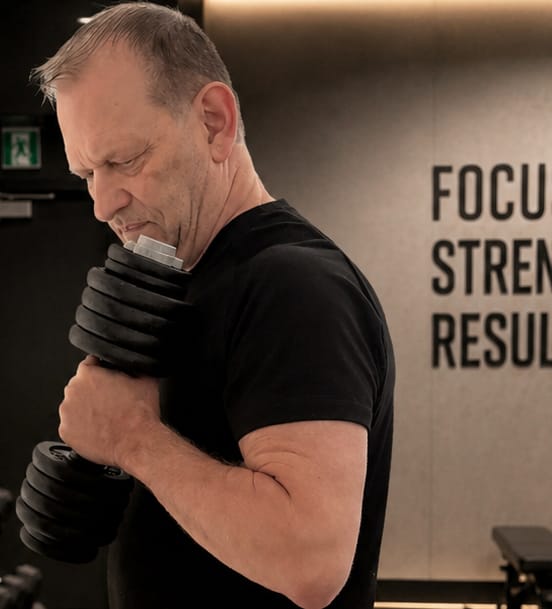
I walk most days, lift weights two or three times a week, watch my calories and try to eat reasonably well. Yet the scales seem to have developed a mind of their own and those love handles seem to be making a reappearance.
Perhaps some of you can explain that particular conundrum!
I’ve decided it’s time to take a fresh look at my routine, with a renewed focus on fitness, healthy eating, protein and maintaining strength as I get older.
I’m thinking in terms of three months rather than a quick fix. Something practical that can fit around everyday life, rather than a plan that takes over everything else.
Last week, I said I’d share more about how I intend to approach it.
So here’s the question: who fancies joining me?
We don’t all need the same goals. Perhaps you want to walk more, improve your strength, get back into exercise, eat a little better or simply feel more energetic.
We could share what we’re trying, what works and what doesn’t.
No heroic promises, no competition and certainly no need to buy a new wardrobe of gym clothes before we start.
Just a few people making a conscious effort to look after themselves a little better.
I’ll be sharing my own progress, including the bits that don’t go according to plan.
Over to you
One of the things I enjoy most about these weekend conversations is that a simple question can take us somewhere completely unexpected.
So, before I disappear to resolve my football dilemma, here are a few things I’d like to ask you.
Have you ever made a big change in your sixties and felt guilty about it, even though you knew it was the right decision?
Did you pursue your dreams, or did reality get in the way?
Do you still have a dream you’d like to follow?
Have you become more adventurous with age, or more cautious?
Have you ever discovered a forgotten pension pot? I did, and for once I took my own advice: size really doesn’t matter. It’ll pay for a nice weekend away!
And should we leave money to our grandchildren in our wills, or is there a case for helping them while we’re still around to see the difference it makes?
That last one might be a conversation all of its own.
You can see how this works. Start with a football match, and before you know it, we’re discussing life choices, dreams, money and what we want from the years ahead.
Perhaps that’s what life after 60 should be about: being willing to ask questions, challenge a few assumptions and work out what matters to us now.
We’ve all got different circumstances, responsibilities and ambitions. There’s no single right answer.
But I do think it’s worth asking ourselves one question from time to time:
If I want the next chapter of my life to be different, what am I prepared to change to make that happen?
I’d love to hear your thoughts. And if you’d like to join me for the three-month health challenge, let me know in the comments.
Now, back to that football match. Southampton or my grandson?
Some conundrums are harder than others!
Frequently Asked Questions
Is it too late to make life changes after 60?
No. Your sixties can be an opportunity to reassess your priorities, explore new interests and decide how you want to spend the years ahead. Your circumstances may have changed, but that doesn’t mean you have to abandon your ambitions.
Why do I feel guilty about putting myself first after 60?
Guilt can arise when you’ve spent years prioritising family, work and other people’s needs. Making time for your own ambitions may feel unfamiliar. However, choosing a new direction doesn’t mean neglecting your responsibilities. It’s possible to honour your commitments while making room for what matters to you.
How do I decide what I want from the next chapter of my life?
Start by considering what gives you satisfaction, what you would like to change and what you’ve been putting off. Choose one or two realistic priorities, then identify practical steps you can take towards them. You don’t need to have your entire future mapped out before you begin.
How can I stay healthy and active after 60?
Focus on sustainable habits that suit your circumstances, including regular physical activity, strength-building exercise, balanced nutrition and sufficient recovery. Start at a level appropriate for your fitness and health, and build gradually. Consistency is generally more useful than attempting an ambitious routine you cannot maintain.
Living a balanced life after 60 sounds straightforward in theory, but in practice, it occasionally requires a complete step back.
A chance to recharge, appreciate what we have and, most importantly, spend time purely on someone else’s terms.
You might have noticed there was no weekend conversation from me last week. That was because I came remarkably close to keeping a promise to Sharon.
Thanks to the wonders of scheduled publishing technology, I managed to queue up Monday’s business conversation and a midweek article, ironically about life balance, before we left.
The week before had been a whirlwind of client visits across Ireland and the North West, so our much-anticipated autumn getaway to one of our favourite Greek islands couldn’t have come at a better time.
My promise was clear: no client calls, no talking shop, no mention of Ropho and, strictly speaking, no treating the holiday as a research trip.
In Sharon’s words, I’d already turned our summer coastal trip into a “working commentary”. If we were going to do a proper working trip, we’d plan one properly.
After a bit of gentle negotiation, a middle ground was reached. I was permitted a quick message check each morning and a single hour a day to scribble down website ideas.
I thought that was a pretty reasonable compromise. I’m not entirely convinced Sharon saw it that way.
Can We Really Switch Off Anymore?
We arrived back yesterday, and my first task was taking a half-excited Poppy for a walk across the local fields.
After an initial display of genuine affection, she usually sulks for a couple of days, just to remind us that she should have been invited along too.
Reflecting on the holiday, I realise how extraordinarily lucky I am. Sharon is hugely supportive of everything I build here, serving as my unofficial proofreader, co-editor, travel coordinator and note-taker extraordinaire.
I do have one small confession, though. Inspiration has a habit of striking when you finally slow down.
Between the quiet strolls through Greek village streets and having time to actually think, I’ve come home with a notebook full of ideas and a clear strategy mapped out for the months ahead.
So much for switching off completely!
But it did get me thinking about how difficult it has become to escape the demands of everyday life.
Telling the children we’re going away seems to make little difference. The phone still rings, messages still arrive and, before long, we’re catching up on what’s happening at home.
I sometimes wonder what holidays were like before mobile phones became part of our lives. You made a quick phone call from the hotel to say you’d arrived safely, perhaps sent a postcard from the hotel lobby, and that was about it.
Now we’re permanently connected. Even when we’re sitting in a beautiful Greek village enjoying a leisurely lunch, the outside world is only a few taps away.
Of course, being available to family is a good thing, and none of us would really want to lose that connection. But is there a point when being constantly contactable stops us from properly relaxing?
How easy do you find it to switch off when you’re away? Do you embrace the opportunity to disconnect, or are you just as attached to your phone as you are at home?
The Reality of Coming Home
Of course, the real world has a habit of catching up with you pretty quickly.
Barely had we unpacked when Sharon’s first mutterings began.
“I think the lounge and kitchen need redecorating.”
Now, I’m all for a comfortable home, but is it really normal to redecorate rooms every 18 months?
Apparently, the answer is yes. At least, it seems to be in our household.
Then there’s the lawn that needs mowing, the spring bulbs that need planting and a growing list of little jobs that somehow manage to accumulate while you’re away.
I’m beginning to think the answer might be to get a gardener.
Although, knowing my luck, that would probably just create another list of things that need doing.
It’s funny how quickly we slip back into our usual routines. One minute we’re wandering through peaceful Greek streets with absolutely nowhere in particular to be. The next, we’re discussing paint colours, garden maintenance and what needs doing before winter.
Perhaps that’s another part of finding balance. It’s not just about getting away from everyday life, but finding a way to enjoy it when we return.
A Butcher, a Barbecue, and a New Fitness Challenge
Talking of bargains, I have to confess to another little weakness.
I spotted a brand-new, all-singing, all-dancing gas barbecue in an autumn clearance sale yesterday. Far too good to leave behind, obviously.
So now I have a shiny new barbecue sitting in the garage, ready for next spring.
There’s just one small problem: I’m not entirely sure Sharon shares my enthusiasm. I can’t imagine why.
Perhaps it’s a man thing, or perhaps it’s simply the irresistible satisfaction of finding a good deal, even when you don’t strictly need it right now.
It did get me thinking about food, though, and another little lifestyle change I’m planning.
My dad was a butcher, so perhaps it’s no surprise that I still appreciate a proper local butcher shop. There’s something reassuring about knowing where your food comes from, being able to ask a few questions, and dealing with someone who genuinely knows their trade.
I’m planning to get back into the habit of buying more of our meat locally rather than relying entirely on the supermarket.
It’s partly about quality, but there’s another reason.
As many of you know, I’ve been spending an increasing amount of time sitting at my laptop lately.
Building Ropho, developing new guides, and planning the next stage of the business is exciting, but it does mean my working days are becoming rather more sedentary than I’d like.
And the scales have started subtly reminding me of that.
So I’m planning a new three-month health challenge, with a renewed focus on daily fitness, healthy eating, and making sure I’m getting enough protein to keep strength and energy levels up.
I’ll share more details about that in Wednesday’s article, including how I’m structuring the routine and whether I can make it work alongside the demands of building a digital business over 60.
In the meantime, I’m curious:
Do you still use a local butcher, or has the supermarket become your default one-stop shop?
Have you found that your eating habits and fitness routines have had to adapt as you’ve gotten older?
It seems that even after a relaxing break in Greece, there’s always another project waiting around the corner!
Perhaps that’s what balance looks like at this stage of life. Knowing when to step away, enjoying the people and places around us, and recognising when our routines need a bit of a rethink.
As is often the case, my midweek conversations are shaped either by whatever is happening in my day-to-day life or by the brilliant chats that come off the back of previous posts. They often take me down paths I hadn’t originally planned for.
The business discussions usually go more or less where I expect them to.
It’s the midweek and weekend chats that continue to surprise me.
They’ve made me realise just how many adventurous, active over-sixties are out there, rolling up their sleeves and living extraordinarily fulfilled lives.
I feel genuinely privileged that so many of you share your experiences with me—including the genuine hurdles you’re overcoming along the way. The collective positivity across this community is quite amazing.
I also want to say a proper thank you to everyone who has commented on the evolution of the site.
I know some of you have found navigating the sheer volume of material I’ve put up a little tricky recently!
Over the next few months, I’m going to work on making the website much easier to navigate so it’s far simpler to find the topics you’re interested in.
And, of course, I’ll keep trying to tackle subjects that you find useful, interesting, or perhaps just worth having a good conversation about.
Which brings me neatly to a topic that has been weighing on my mind lately—and one that seems to come up time and time again:
Health. Fitness. Nutrition. And this rather elusive concept called “life balance.”
What Exactly Is Life Balance After 60?
Everywhere you look, particularly if you ever scroll through Instagram or TikTok, someone seems to be lecturing us on how crucial it is to achieve this pristine, perfectly symmetrical balance in our lives.
I’m not entirely convinced.
Think about anyone who has ever achieved extraordinary things.
The surgeons who sacrificed sleep and social lives to become the absolute best in their field. Those elite athletes who trained relentlessly. Many actors who spent years grinding away to break through.
The master mechanic, obsessed with perfecting their trade. And the business owner who poured everything into building a company from the ground up.
Did any of them have “perfect” life balance? Probably not.
At certain points in their lives, they threw the absolute kitchen sink at what they were trying to achieve. And perhaps that was completely fine for that season of life.
The same applies to family. If you’ve ever raised a large family, you’ll know that trying to juggle six kids, school runs, hobbies, demanding careers, weekly shops, cooking, holidays, and whatever unexpected curve ball landed on the kitchen table that morning isn’t exactly a zen, balanced existence. It’s more like organised chaos—and somehow, most of us managed to get through it in one piece.
So, What Changes After 60?
For most of the time I have been helping businesses, the majority of my business clients were over 50, many over 60.
In truth, the conversations I had with them over the years are the exact reason I started Ropho in the first place.
Time and again, sitting across a desk or over a coffee, I’d hear the same quiet regrets:
“I didn’t spend enough time with the kids growing up.”
“I didn’t nurture my relationship with my wife, and now we live like two polite strangers in the same house.”
“I have money now, but no one to share it with.”
Or one of the most common ones of all: “I’ve finally passed on or sold the business, and now I’m completely lost. I’ve improved my golf handicap, I do the gardening, but I don’t know who I am without the hustle and risk taking.
I remember one particularly successful client who said to me, “I finally bought my dream yacht, Steve. But everyone I actually want on board is too busy with their own lives. And the people who do show up, I realise I have almost nothing in common with.”
It was heartbreaking. He’d worked his whole life, spent every waking hour on the factory floor, and every holiday had passed him by in a blur of worrying about the next acquisition or the quarterly bottom line.
Some of this strikes very close to home for me (Not the yacht).
It’s a big part of why I’m stepping back from taking on new business clients and wrapping up my consultancy—to throw my energy into running Ropho.
I want to help myself and others find genuine balance without losing the drive that makes us tick, while broadening our horizons and trying new things.
Perhaps the answer isn’t that we suddenly need to discover some mythical, perfect equilibrium.
Perhaps we simply need to decide what is important enough to protect.
The Rule of Protected Time
In my years of working with business owners who were grinding out 60 or 70-plus hours a week, I always pushed them to adopt one non-negotiable rule: protect three hours a week purely for strategic thinking and planning, and three hours for physical fitness.
I noticed over the years that the most resilient, sharpest business leaders did have a version of balance.
They maintained their physical health—whether that was getting to the gym, cycling, or daily walking. A mentor told me decades ago: “Fitter bodies build clearer minds.”
No phone calls. No interruptions. No excuses.
Just three hours locked in the diary to step away from the relentless day-to-day grind and ask: Where am I actually going?
It wasn’t about “finding” spare time. There was never any spare time. It was about protecting time that mattered.
And I think the exact same principle applies to our health as we get older.
If you want to fit in three strength-training sessions a week, that’s three hours. Not thirty hours. Not an elaborate, six-day-a-week athletic regime. Three hours.
The mistake we so often make is waiting for those hours to magically appear in the week. They won’t. So put them in the diary. Protect them. Treat them as non-negotiable appointments with yourself.
If a major client wanted that hour, you’d find a way to reschedule around it. If a family member needed you, you’d make it work instantly.
Perhaps it’s time we occasionally extended that same courtesy to ourselves.
And I’m certainly not suggesting everyone needs to be lifting heavy iron in a gym.
For you, it might be daily walking, swimming, cycling, mobility work, or working with resistance bands in the front room. The only thing that matters is finding something active that you actually enjoy enough to keep doing.
One thing I’ve learned with a few more miles on the clock is that staying fit isn’t about pretending you’re 25 again.
Our bodies change. Knees get a bit grumpy. Shoulders don’t always appreciate movements they used to breeze through. Lower backs voice their disapproval, and wrists can play up out of nowhere.
Exercises that once felt completely natural might need adapting. That isn’t failure—it’s simply reality.
The answer isn’t to throw in the towel and sit on the sofa; it’s to adapt the movement.
Change the angle, reduce the load, tweak the range of motion. Swap a barbell for dumbbells, or bring in resistance bands. Find a movement that works the target muscles without infuriating whatever joint is complaining that week.
The objective here isn’t to impress anyone in a gym. It’s to stay strong, mobile, and capable enough to enjoy the things we actually love doing.
Walking, golf, travelling, gardening, kicking a ball around with the grandchildren, or simply standing up from a deep armchair without having to make a dramatic sound effect. Those are the things that matter.
A Little Experiment for the Ropho Community
This leads me to an idea I’d love to try across our community.
If you’ve discovered a clever tweak or adjustment to an exercise that has helped you navigate a dodgy knee, a stiff shoulder, a stubborn back, or any other little ache, tell me about it in the comments.
It doesn’t need to be a groundbreaking medical miracle. Just a practical, real-world adjustment that worked for you.
Every couple of weeks, we could pick one common issue and share the best practical workarounds our readers have tested in the real world. I’m increasingly convinced that those of us over 60 don’t need more twenty-something fitness gurus telling us what we should be doing.
Sometimes, we just need to hear what ordinary people living real lives have found actually works.
And Then There Was the Fish Pie…
Which brings me neatly, as always, back to nutrition.
Following on from our recent chats about hearty stews and casseroles, I’ve been thinking a lot about protein—specifically, how we get enough of it into our diets as we age without turning every meal into a dry, bland “fitness influencer” nightmare.
Now, I love a good fish pie. It’s the ultimate comfort food: fresh fish, seafood, crisp potatoes, and a rich, creamy sauce. The snag is that traditional recipes can end up pretty heavy.
So, earlier this week, I decided to experiment and bake a lighter, high-protein version. I put together a grand mix of white fish and prawns, whipped up a lighter sauce, and tweaked the potato topping.
Personally? I thought it was rather good.
Sharon, on the other hand, had a somewhat… different opinion.
Which probably tells you everything you need to know about my prospective second career as a celebrity recipe developer!
So, I won’t pretend I’ve unlocked the secrets to the world’s ultimate healthy fish pie just yet. I’ll keep tweaking the recipe in the kitchen, and if I ever manage to produce a version that gets a genuine nod of approval from Sharon, I’ll share it here straight away.
In the meantime, perhaps that’s as good a definition of “life balance” as any: trying to look after yourself without making life unnecessarily complicated.
Eat reasonably well. Move your body. Get a little stronger where you can. Protect time for the people you love. Do things that bring you genuine joy.
And occasionally? Just eat the bloody fish pie. It doesn’t have to be perfect.
Life balance after 60 doesn’t necessarily mean giving everything equal time. It can simply mean deciding what matters most and protecting enough time for your health, relationships, interests and the things you enjoy.
How can I stay fit and active after 60?
You don’t need an elaborate fitness regime. Walking, swimming, cycling, mobility exercises, strength training or resistance bands can all help. The important thing is finding activities you enjoy and can keep doing.
Is strength training important after 60?
Strength training can be a useful part of staying strong and capable as we get older. It doesn’t necessarily mean lifting heavy weights; exercises can be adapted using lighter weights, dumbbells or resistance bands.
How much exercise should I do after 60?
There isn’t one perfect routine for everyone. The important point is to make regular physical activity part of your week and protect time for it, rather than waiting for spare time to appear.
How can I adapt exercise as I get older?
Our bodies change, so movements that once felt easy may need to be modified. Changing the angle, reducing the load or range of movement, or choosing a different exercise can allow you to keep moving without unnecessarily aggravating troublesome joints.
How can I make more time for myself after 60?
Rather than hoping spare time appears, try treating time for yourself as an appointment. Put exercise, hobbies, social time or simply time to think into your diary and protect it.
What should I eat to stay healthy after 60?
A sensible approach is to eat reasonably well without making food unnecessarily complicated. Protein can be particularly useful to consider as we get older, alongside a varied and enjoyable diet.
Can you still improve your fitness after 60?
Absolutely. Getting older doesn’t mean giving up on becoming stronger, fitter or more mobile. The key is adapting your approach to where your body is now rather than trying to train as though you’re 25.
Does life after 60 have to mean slowing down?
Not necessarily. Life after 60 can be a chance to redirect your energy towards things that matter to you, whether that’s fitness, travel, hobbies, relationships, work or trying something completely new.
Do I really need to have perfect balance in my life after 60?
Probably not. Life rarely works that neatly. A better approach may be to decide what is important enough to protect — your health, relationships, family, interests or simply time for yourself — and make sure those things don’t continually get pushed aside.
After a busy week in the North West of England—and with an equally packed schedule ahead, including business trips to Ireland and Switzerland before we head off for a break—I’ve been reflecting on just how much travel has changed over the last thirty years.
It hit home recently when I was thinking about the early days of short breaks. Today, a long weekend in Europe is second nature for a growing number of people in our circle. The same goes for business travel; so many clients spend their working lives importing and exporting materials across the globe, with regular trips to Eastern Europe, the Middle East, or China treated as routine.
My thoughts drifted back to when Sharon and I first met. We were both divorced with young families, and holidays in those days were strictly bounded by company allowances—usually four weeks. I had recently started a new company, so holidays were even more restricted, with several days forced over Christmas, Easter, or set school holiday blocks.
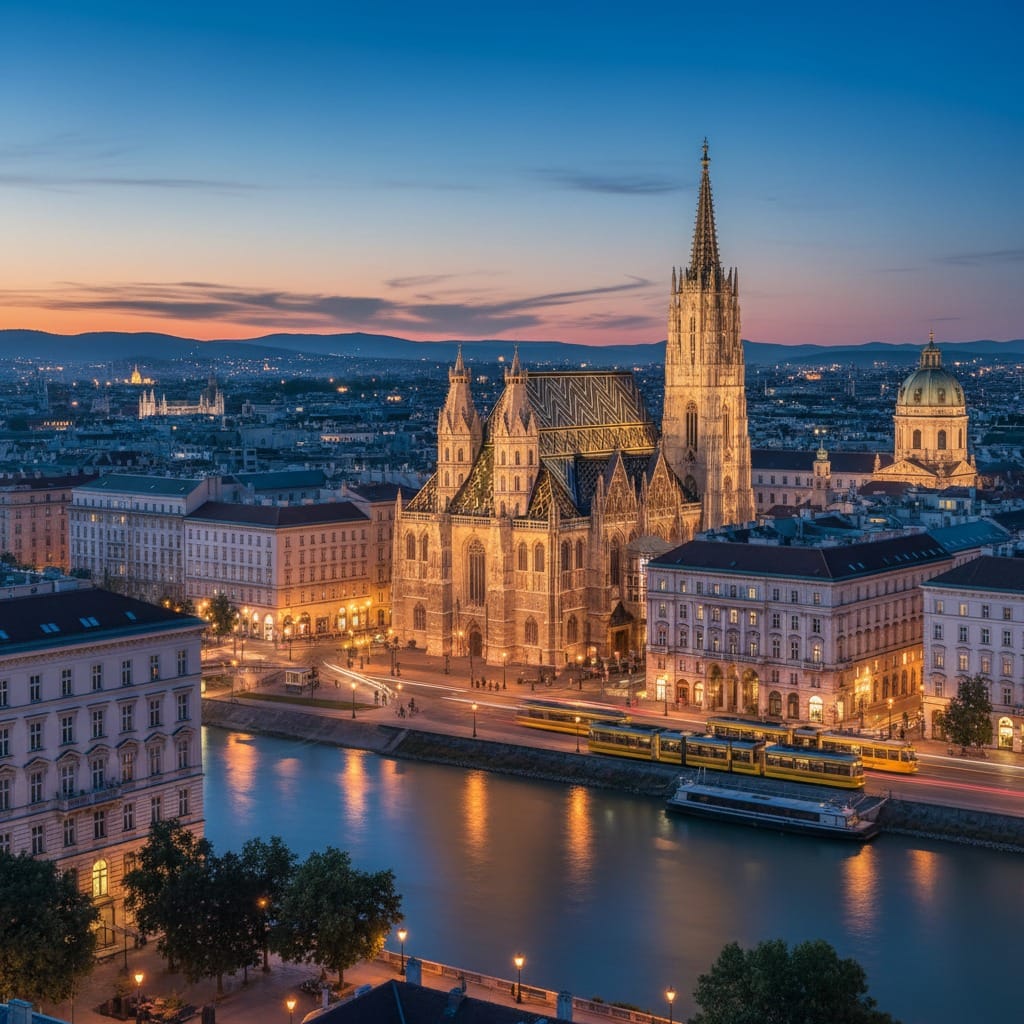
We hadn’t been seeing each other long. I was doing particularly well financially at the time and, if I’m honest, I was keen to show off a little. Having just returned from a work trip to Germany, I spontaneously booked four nights in Vienna without telling her. Surprises are a great idea, right?
Communication was a bit different back in the late nineties. We had mobile phones, but we weren’t tethered to them the way we are now. Landlines were still the primary connection, and messages had a habit of getting lost or mangled in transit.
What started as a grand romantic gesture quickly turned into a logistical test:
The School Run & Family Logistics: It was early December and strictly term time. Dropping the news that we were heading off from Friday to Tuesday raised plenty of eyebrows. “What do you mean you’re leaving Friday? It’s not holiday time! You had yours in August and you’ve got a week off at Christmas—what’s going on?”
Eventually, childcare was sorted, but I was already starting to wonder if my “spontaneous surprise” was a terrible mistake. When I drove from Southampton to Camden to pick Sharon up, I was greeted by the single largest suitcase I had ever seen.
“You do realise we’re only staying four nights?” I asked.
“I know,” she replied. “It feels like a bit of a waste of time—it’s freezing over there! Couldn’t we have saved our money and gone somewhere warm in August with all the kids?”
Tired after driving from Southampton to London and then on to Gatwick, I kept asking myself if the effort was going to be worth it.
It was.
Vienna was spectacular. From our hotel—which felt impossibly modern at the time—to the breathtaking contrast of the city’s historical architecture, it turned into a weekend of dreams. We skated on the outdoor ice rink, ducked into tiny local pubs with live music spilling into the streets, took a horse-drawn carriage tour through the historic centre, and soaked in the culture.
It was magnificent. Even with the inevitable changes every city undergoes over the decades, Vienna remains my absolute favourite European city to this day—and a reminder that sometimes, the hardest trips to organise yield the best memories.
Vienna Then and Now
Over the years since that first visit, Vienna has undergone a massive transformation. Since 1998, it has morphed from a somewhat strangely beautiful, ageing post-Cold War city into a vibrant, booming, “modern European city”.
While it has proudly maintained its iconic imperial charm, classical music heritage, and strict coffeehouse culture, the physical and cultural landscape of the city has changed dramatically.
What Has Changed
Architecture, regeneration, transport, dining and the increasingly international feel of the city have all changed considerably.
Vienna has changed considerably since our first visit. At the start of 2026, the city had just over two million residents, continuing the growth that has transformed the feel of the city since the late 1990s.
Vienna was still shaking off its post-Iron Curtain identity. For decades, like a lot of European cities, it had an ageing, shrinking population with a reputation for being slightly grey, traditional, and resistant to change.
The city now has a much more youthful and culturally diverse feel.
The city’s famous MuseumsQuartier (MQ) was just beginning its transformation. Entire swathes of the city—like the old southern train stations and the areas along the Danube—were underutilised brownfield sites.
High-rises were nearly non-existent; the Andromeda-Tower was only just being completed in 1998.
Vienna’s skyline has since shot upward with hyper-modern architectural marvels like the ultra-slim DC Tower. The massive MuseumsQuartier opened in 2001 and is now one of the largest art and culture zones in the world.
Cars still heavily dominated major shopping thoroughfares and neighbourhood centres. Cycling was mostly recreational rather than a primary mode of commuting.
There are now extensive cycle routes, while the city’s subways and trams are modern and efficient.
Dining out was very traditional, restaurants were formal, strictly indoor, and often filled with cigarette smoke.
Thanks to smoking bans and rising global temperatures, Vienna’s food scene has spilled outdoors. Sidewalk cafes, pop-up bars along the Danube Canal, and trendy international restaurants line the city.
The historic centre, coffeehouse culture, architecture, music and the character that keeps bringing visitors back. Vienna’s coffeehouse culture remains officially recognised as intangible cultural heritage, and the city’s own tourism material still describes the coffeehouse as a place to meet, read, talk and simply spend time.
FAQs
Is Vienna a good destination for a European city break? Vienna works particularly well for a short European break because its historic centre, museums, cafés, restaurants and major sights can be explored without needing a long itinerary.
What is Vienna famous for? Vienna is particularly known for its imperial architecture, classical music, museums, traditional coffeehouses and distinctive food culture.
Is Vienna suitable for travellers over 60? Vienna can work particularly well for older travellers who enjoy combining sightseeing, culture, good food and relaxed time in cafés, with an extensive public transport network making it possible to explore the city without relying entirely on walking.
Some Cities Stay With You
I suppose that is why Vienna has stayed with me for nearly thirty years.
It isn’t simply because it is beautiful, or because it has wonderful food, fascinating history and some of the best architecture in Europe. It is because of what that first trip represented.
Sharon and I were still relatively new to each other. We had young families, busy lives and plenty of complications to work around. We weren’t travelling like we do now, where you can jump on a plane for a few days almost as casually as taking the car somewhere for the weekend.
That first trip was a bit of a gamble.
Looking back, I probably made it more complicated than it needed to be. I booked it without properly thinking through the childcare, the school arrangements, the timing, the travelling and, apparently, the amount of luggage required for four nights in December!
But we went.
And nearly thirty years later, I can still remember the excitement of arriving, the cold, the lights, the architecture, the little places we found and the feeling that we had somehow escaped normal life for a few days.
Perhaps that is what I like most about travelling.
Not necessarily ticking places off a list, but creating memories with someone that stay with you long after the hotel has been forgotten.
Vienna has changed enormously since that first visit, and so have we. Yet every time I return, there is still something familiar about it. Maybe that is why it remains my favourite European city.
And it has got me thinking about other cities we’ve returned to over the years. Milan and Dubrovnik are two more that immediately spring to mind, and both have their own stories.
I’ll probably share those another time.
For now, I’d love to know:
Is there a city or place you’ve visited that has stayed with you for years?
Perhaps somewhere you first visited when you were younger, returned to much later, and suddenly saw through completely different eyes.
Sometimes the places that matter most aren’t necessarily the ones on somebody else’s list of must-see destinations.
I’m writing this in a rare quiet moment as I rush between client meetings up in the North West this week.
With the Crete trip getting closer, I’m still making the rounds explaining the winding down of my consultancy practice. People ask if I enjoy all the endless driving and hotel stays.
The honest answer is no, not really.
It’s the one side of the business I certainly won’t miss.
Driving across the Cheshire countryside today, it struck me just how fast time is moving.
Autumn is well on its way. The evenings are getting shorter, there’s a definite chill in the air, and before long we’ll be reaching for the slow cooker again.
I also had a call from my grandson today. He’s been picked for his school football team in his favourite position. Apparently, his Sunday league coach insists on playing him in the wrong spot!
Mind you, he mentioned he needs new boots. I’m convinced he manages to wangle a new pair out of me every month.
Midweek Chat: Comfort Food & Mum’s Clever Ways
This was supposed to be one of our regular finance chats, following on from our pension discussion. Hopefully, a few of you managed to track down a forgotten pot or two.
Our next deep dive will be on investing in our sixties, but driving through the autumn drizzle today just made me think of my mum.
We didn’t have a lot of money growing up, but my word, she was clever.
From paying the Co-op insurance collector weekly at the door to saving up for everything, you simply never bought something if you hadn’t saved for it first.
I still catch myself telling my own kids that whenever they start talking about car leases or buying things on credit.
Mum was also a master at making the most of cheaper cuts of meat with her winter stews and casseroles.
There’s something deeply comforting about a good old-fashioned meal bubbling away in the kitchen while the weather outside does its worst.
Which brings me to my first question for today:
What’s your all-time favourite autumn stew or casserole?
A Few Quick Over-60 Discounts Worth Checking
Autumn also brought back another classic phrase my mum used to preach:
“Look after the pennies and the pounds will look after themselves.”
I’m not sure how much attention I paid to it when I was younger, but it makes a lot more sense as the years go on.
And if we can save a few pounds here and there, why not spend those savings on things we actually enjoy?
There are plenty of useful perks and discounts available once you reach 60 across the UK. The point isn’t to spend your life hunting down discounts. It’s simply that if someone is willing to knock money off the price, why pay full whack?
A few worth checking:
Free NHS prescriptions: Available in England once you turn 60.
Free NHS sight tests: Available in England for everyone aged 60 and over.
Senior Railcard: Available from age 60 and can save a third on most rail fares.
Concessionary bus travel: Rules vary across the UK, so check what’s available where you live.
Retail discounts: Some retailers offer specific over-60 discounts or discount days, so it’s always worth asking.
It always pays to ask before you pay!
And Then There Were the Sayings…
Of course, our parents didn’t have Google or endless parenting books.
They had sayings.
I’m willing to bet quite a few of us have caught ourselves using the exact same ones with our own children and grandchildren.
Here are five that immediately came to mind:
“Were you born in a barn?”
Delivered the second a door was left open. Although, thinking about it, barns do actually have doors.
“Am I paying to heat the entire street?”
A true classic that probably hits even harder today.
“This isn’t a hotel, you know.”
Usually followed by a reminder that washing, cooking and cleaning don’t magically happen by themselves. Sharon still say’s this to me now. I have no idea why!
“I’m going to count to three…”
Nobody ever really knew what happened at three, nobody wanted to find out either.
“I don’t care who started it.”
The ultimate parental ruling.
Both kids were instantly in trouble.
Looking back, maybe our parents really did know a thing or two.
Over to You…
Let’s open up two conversations in the comments today:
1. What’s your go-to stew or casserole recipe as the weather turns?
2. What’s the funniest or most memorable saying your parents or grandparents used?