Author: stevek

  • Business Systems and Processes: Why They Matter at Every Growth Stage

    Week 8: The Ultimate Engine of Growth – Why Systems Matter at Every Stage

    Last week’s topic – Sales: Why Learning Techniques is Important in Your 60’s – finished with the acknowledgement that even when your business has sales, the reality is that a vibrant, sustainable modern business requires structured setups across everything from accounting to production.

    This week, we look at the why and the how.

    Whether you are a sole trader just starting out, an established firm reorganising for growth, or a founder preparing to pass the reins to future generations —systems are your most valuable asset.

    Let’s be completely honest: without systems, you don’t own a business; you own a job.

    And usually, it’s a highly stressful, 24/7 job where you are the single point of failure.

    If you get sick, take a holiday, or simply want a day off, does everything grind to a halt?

    If the answer is yes, you haven’t built a business yet—you are the business.

    Systems are about buying back your time and sanity. They ensure things get done the right way, every time, whether you are in the room or not.


    Systems for Every Stage of the Business Journey

    No matter where you currently stand on your business timeline, implementing clear, repeatable processes changes the game:

    • The Start-Up Stage: In the beginning, it’s about survival and consistency. Systems ensure that even if it’s just you, your marketing, invoicing, and customer service happen predictably every time, building a trusted brand from day one.
    • The Reorganisation & Growth Stage: You cannot scale chaos. To take on more work, hire staff, or expand your services, you must download the daily operations out of your head and onto paper (or digital platforms) so others can replicate your success.
    • Passing on to Future Generations: Legacy requires clarity. If the next generation is going to step in, they need a clear operational playbook, not a guessing game. It protects the family legacy and smooths out the transition.
    • Selling Up: When an investor or buyer looks at your business, they aren’t just buying your past turnover—they are buying your future predictability. A business completely dependent on the owner is worth very little. A business run by rock-solid systems is a premium asset.

    Where to Start? The Core Pillars

    You don’t need to systemise everything overnight. Focus on the core pillars that keep the lights on and the revenue flowing:

    1. Financials & Accounting: Automated invoicing, regular cash-flow forecasting, and clear payment terms.
    2. Marketing & Sales: A repeatable pipeline for generating leads, nurturing them, and closing deals.
    3. Operations & Delivery: Standard Operating Procedures (SOPs) ensuring your product or service is delivered to the exact same high standard every single time.

    Final Thoughts on Our Mini-Series

    Over the last 8 weeks, we have covered the fundamentals of planning, structuring, and running a successful business. But the final piece of the puzzle is always execution. Systems give you the freedom to step back, look at the big picture, and actually work on your business, rather than getting buried in it.

    Your 8-Week Checklist: Where do you need to focus today?

    • The Vision: Is your business running you, or are you running it?
    • The Plan: Do you have clear, trackable milestones for the next 12 months?
    • The Engine: Are your daily operations reliant entirely on you, or do your systems do the heavy lifting?

    Building a sustainable business isn’t a sprint; it’s a marathon. But you don’t have to figure out every mile of the track on your own.

    What’s Next?

    Now that the foundations are laid, we are going to dive deeper. Over the next two weeks, we are tackling two massive topics that can make or break an established business:

    • Next Week: The critical difference between Growth and Scaling (and why getting the order wrong can destroy a business).
    • The Following Week: A focused look at KPIs—how they should work to keep you on track, and why they so often fail.

    Thank you to everyone who has followed, liked, and commented throughout this mini-series. It’s been fantastic sharing these principles with you.


    Let’s turn talk into action.

    Is there a specific business challenge, software riddle, or operational question you need an answer to right now?
    Is there a specific business challenge, software riddle, or operational question you need an answer to right now?

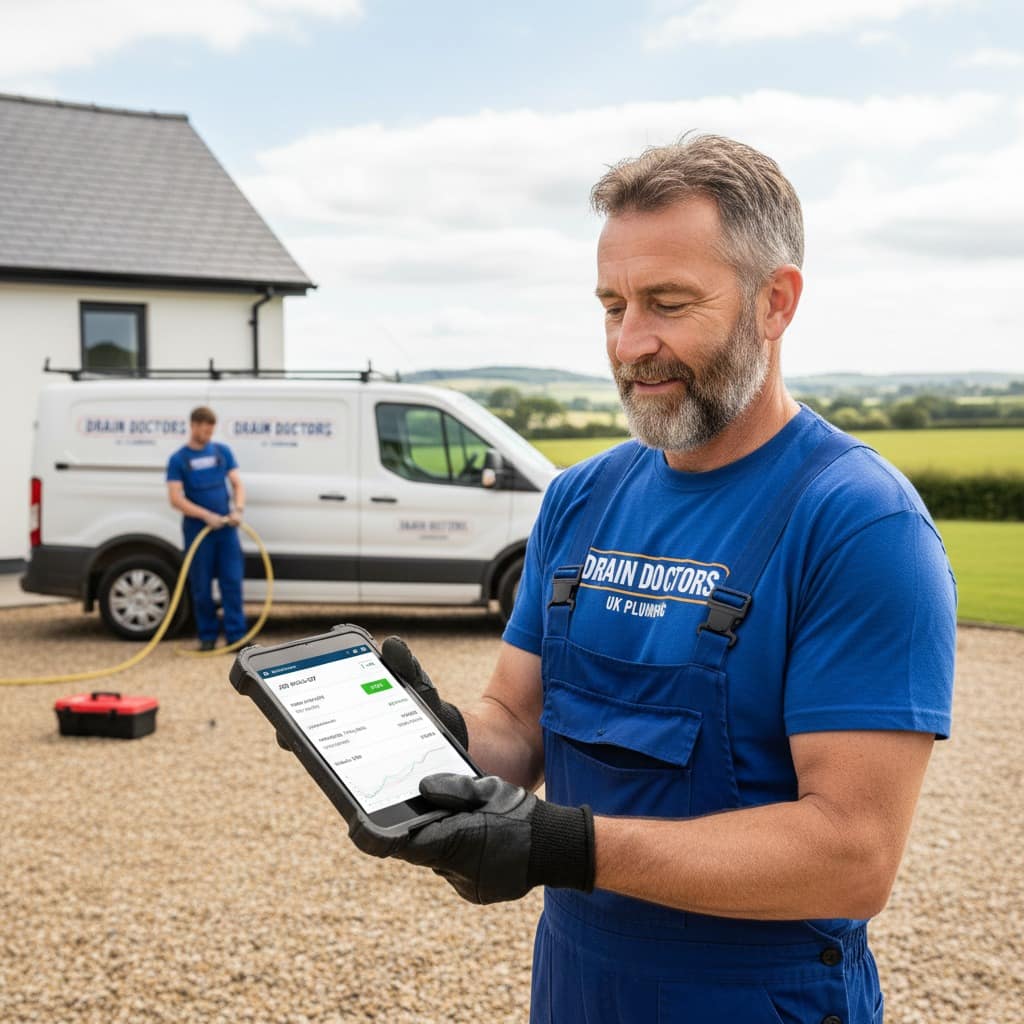
    A Real-World Example: A local trade owner recently came to me with a dilemma: “What is the best accounting software for my business? I’m a plumber in a rural area with 4 employees and 2 vans.”

    He was feeling overwhelmed trying to weigh up Xero, Zoho, and QuickBooks.

    He wasn’t a “tech guy”—he just wanted a straightforward tool that worked without the headache.

    I laid out an independent, jargon-free comparison of how each one fitted his exact setup.

    Because his business was straightforward, he didn’t need bells and whistles; he needed simplicity.

    He chose QuickBooks because it matched his comfort level perfectly. The best system is always the one you and your team will actually use.

    Whatever your unique hurdle is—whether it’s choosing the right software, structuring your team, or mapping out a strategy—Ropho can provide an independent, practical outline tailored to your reality.

    Drop your question in the comments below or send me a direct message, and let’s get you the clarity you need to move forward!


  • Life Planning in Your Sixties: A Simple Weekly Approach

    Life Planning in Your Sixties: A Simple Weekly Approach
    St Albans Clock Tower

    I’m sitting in St Albans this morning, fresh from a 9:00 am meeting.

    As a business adviser, my world is usually built on rigid plans. If you don’t have a plan, your dream stays a dream.

    But I’ll be honest with you, four months ago, when I launched Ropho, my personal life was becoming a bit chaotic.

    I was great at planning for clients, but failing at planning for me.

    The “Reset” That Changed Everything

    As many of you know, our daughter was diagnosed with breast cancer last year.

    It’s been a rough ride, but she’s recently been given the all-clear (though radiation and hormone treatments continue).

    It hit me: I always tell my business clients to treat setbacks as resets.

    Why wasn’t I doing that at home?

    In our 60s, a “reset” isn’t a failure-it’s vitally important.

    I realised I was just agreeing to everything, leaving my wife, Sharon, to organise our lives, and often ending up doing things I didn’t want to do or – worse – forgetting the things that actually matter.

    A Framework, Not a To-Do List

    I designed three planners (Daily, Weekly, Monthly) when I started this site, but the Weekly Life Balance Template is the one that saved me.

    It’s not a timetable.

    It’s a framework. It’s designed so you don’t reach Sunday and say, “Oh s—, I forgot to phone my mum.”

    Here is a snippet of how I’m balancing my week now:

    Simple Weekly Life Balance Template (Google Docs-friendly, printable, and calm)

    How to use this template: This is not a timetable; it is a framework designed to support life, not control it. Fill it in lightly, with a pencil mentality.

    MY WEEK AT A GLANCE Week of: _______________

    One word I’d like this week to feel like: _______________ ❤️

    RELATIONSHIPS & CONNECTION (family, partner, friends, community) ● ●

    🏃 HEALTH & MOVEMENT (walks, exercise, appointments, rest) ● 🎨 HOBBIES, CREATIVITY & CURIOSITY

    💼 WORK / PROJECTS / PURPOSE

    ( , paid work, volunteering, contribution)

    ●

    ●

    😌 REST, RESET & ENJOYMENT

    (nothing planned is still something)

    ●

    ●

    ⚓ WEEKLY ANCHORS

    (things already fixed — appointments, commitments, travel)

    ●

    ●

    🌱 ONE SMALL INTENTION FOR THE WEEK

    (not a goal — just a gentle focus)

    The Results of Planning the “Fun”

    By using this method, Sharon and I have actually put the big “resets” in the diary:

    ✈️ Crete in September 🐘 Thailand in December 🐎 Royal Ascot in June 🪂 Charity Skydive in August

    We have also planned various weekends away to enjoy the things I want to explore on this blog, restaurants, gyms, and some of the beautiful countryside the UK has to offer.

    For me, those are the resets that make life feel balanced again.

    This is a quote I have used in my consultancy business for years.

    One of my clients recently told me I should share it more widely because it captures so much of what I believe:

    “Are you ready? Well, never mind—just do it, or you will never know if you were ready or not. If it doesn’t work out, you can try again.”

    To me, that feels especially relevant in our sixties.

    When we begin to understand more deeply that waiting for the perfect moment, can mean missing some of the very things that bring us joy, purpose, growth, and renewed energy.

    Stop waiting for the perfect “ready.” Just start.

    Want the full Weekly Life Balance PDF for free? Drop a comment below or send me a message and I’ll send it over.

  • The Mid-Week Catch Up: 5 Health Pillars & The Manifestation Mystery

    Early Mornings encourage positive thoughts.
    Early Mornings encourage, positive thoughts.

    Welcome back.

    Still no word on Grandchild No. 7. At this rate, I’m half-expecting them to arrive with a CV and a three-year career plan.

    Today, I’m stepping out of “Business Consultant” mode – mostly.

    My wife pointed out that I recently asked our 11-year-old grandson for his “quarterly projections” on his Maths homework.

    I’ve been told to speak “Plain English,” so here is my attempt at a low-jargon, lighthearted look at life in our 60’s.


    1. The 5 Pillars of (Not) Falling Apart

    I can’t help it – I love a “Pillar.” If it works for a multinational corporation, it works for a 64 year old.

    Here’s the structure I’m using to keep the wheels on the wagon:

    • Real Food: Eating things that actually grew in the ground, not in a lab. In your 60s, Protein is King. Think of it as the maintenance budget for your muscles.
    • Sleep: 7-9 hours. Gone are the days of “I’ll sleep when I’m dead.” Now, if I get 5 hours, I look like I’ve been through a car wash without the car.
    • Movement: 150 minutes a week. It doesn’t have to be a marathon; a brisk walk where you can talk but not sing is the “Zone 2” sweet spot.
    • Sunlight: 15 minutes a day to tell your brain it’s daytime. It turns out we’re basically just houseplants with more complicated emotions.
    • Hydration: Drink water before you’re thirsty. By the time your brain says “I’m parched,” your kidneys have already sent a formal letter of complaint.

    2. Manifestation: Magic or Just a Good To-Do List?

    I want to believe in positive thinking, but “Manifestation” usually sounds like something involving crystals and expensive retreats.

    My take? It’s just “Business Priming” for your brain.

    If you tell yourself you’re going to find a parking spot, your brain starts looking for brake lights instead of clouds. Is it the universe providing? Maybe.

    Or maybe it’s just your Reticular Activating System finally doing its job. Either way, if thinking happy thoughts and it gets the job done, I’m in.


    3. The Scent Review Snag

    I’ve hit a wall with the fragrance reviews. In 2026, everything seems to smell like Pistachio or “Dubai Chocolate” (yes, really).

    The snag? Olfactory Fatigue.

    I’ve spent so much time sniffing “oud-infused-leather-berry” samples that my nose has gone on strike.

    I currently can’t tell the difference between a £200 Parfum and the lemon-scented floor cleaner.

    I’m taking a 48-hour “nose detox” – strictly fresh air and unscented soap—until I can actually tell my Sandalwood from my Strawberry Jam again.


    Coming Soon…

    Once I’ve grown the audience a bit more (and stopped talking like a middle-manager to my family).

    I’ll be bringing in some actual experts to deep-dive into the science behind these pillars.

    But for now, I’m just trying to stay hydrated and keep the “manifesting” to simple things – like a full night’s sleep.

    Quick question for the room: When you’re trying to “manifest” something, do you go full “Zen Master” or are you more of a “shout it at the shower tiles” kind of person?

    “By the way, while I’m obsessing over pillars and protein, I’ve realized that ‘Health’ isn’t just about what you eat—it’s about what you DO.

    I’m currently looking into why having a hobby is actually a medical necessity in your 60s.

    More on that soon, but in the meantime…

    Does anyone have a hobby that doesn’t involve a spreadsheet? I’m asking for a friend (and my wife).”

  • Sales: Why Learning Techniques is Important in Your 60’s

    This week in our Series “How to Plan and Run a Business in Your 60s,” (Week 7).

    Why, Without Sales, You’re Stuffed

    I’ve seen it a thousand times.

    Business owners scratching their heads, wondering why production is stalling or why they can’t negotiate better prices with suppliers.

    Here’s the “unfiltered” truth: You can’t fix production, and you can’t leverage suppliers, if you don’t have sales.

    Sales is the oxygen of your business. Without it, you are stuffed.

    I don’t usually put it that politely in person, but for the sake of the blog, let’s call it “critically compromised.”

    We move from Marketing (week 6).

    To Sales—the engine that turns interest into revenue.

    For entrepreneurs over 60, your greatest sales assets are wisdom, patience, and professional experience.

    However,as i keep mentioning the approach changes drastically depending on whether you are selling to individuals (B2C) or other businesses (B2B).

    B2C vs. B2B Sales: (The Differences)

    Understanding who you are selling to determine’s your strategy.

    B2C (Business – to – Consumer):

    • Selling directly to individuals (e.g., retail, personal services, consulting to individuals).
    • Decision Maker: Usually one person (or a couple).
    • Cycle: Fast, sometimes impulsive.
    • Motivations: Emotion, convenience, personal desire, price.
    • Focus: Emotional connection, brand reputation, speed to close.

    B2B (Business – to – Business):

    • Selling to companies (e.g., B2B consulting, IT services, professional services).
    • Decision Makers: Multiple stakeholders involved (CFO, Manager, Purchasing).
    • Cycle: Longer, complex, and requires high trust.
    • Motivations: ROI (return on investment), efficiency, risk mitigation.
    • Focus: Building long-term relationships, educating the buyer, showing business impact.

    Face-to-Face:Sales Techniques

    In your 60s, you bring a high degree of credibility. Use it.

    1. Embrace Your Experience (The “Wisdom Advantage”): Don’t try to look 30. Your gray hair represents experience. Frame your age as resilience and knowledge that younger competitors lack.
    2. Sell Solutions, Not Benefits: Don’t just list product features. Ask open-ended questions to identify the customer’s pain points, then tailor your pitch to solve that specific issue.
    3. Active Listening & Empathy: Older adults (and buyers in general) respond better to someone who hears them. Spend 70% of the time listening and 30% talking.
    4. The “Cup of Tea” Method (B2B Focus): High-value B2B deals are often closed in person. Focus on building rapport and taking time to connect personally, not just running through a deck.
    5. Preparation and Professionalism: Always research the person or company before the meeting. Bring relevant, high-quality demo materials or case studies.
    6. Confident Closing: If you are face-to-face, you have already earned trust. Be direct about the next step. “Based on what we’ve discussed, I recommend we move forward with option B. Does that work for you?”.

    Telephone Techniques: (Appointment-Only)

    Goal: Get a meeting, not to make a sale on the phone.

    1. The “Respect” Opening: Immediately respect their time to get their attention. “Hi [Name], this is [Name]. I know I caught you in the middle of your day, do you have two minutes to hear why I called?”.
    2. Sell the Meeting, Not the Product: If you explain your product, they will say “I’m not interested.” If you talk about a 10-minute discovery chat to help them save time/money, they might agree.
    3. Use the “Feel, Felt, Found” Handling Objection:
    • Prospect: “I don’t have time to meet.”
    • You: “I understand how you feel [Prospect Name]. Many of my current clients felt the same way initially. However, they found that taking 15 minutes for a demo saved them hours of labour later.”
    1. Offer Two Specific Times (Alternative Close): Never ask, “When are you free?” Ask, “Do you prefer Tuesday afternoon or Wednesday morning?”.
    2. Leverage Referrals: If you know someone they know, lead with it immediately. “I was speaking with [Referral Name] and they mentioned that your company is looking to…”.
    3. Prepare for Voicemail: 80% of calls go to voicemail. Have a script ready that mentions value, not just your phone number.

    These are just some of the basic techniques, for more in depth sales advice please contact for private discussion and training pdf’s.

    For those not at the Sales face!

    Maybe you have a sales team or individual sales representatives.

    The questions then become very different.

    Are they adequately trained and managed and led correctly, do you have systems in place to drive effective sales strategies crm etc.

    To determine if your team and systems are up to par, here is a breakdown of three areas I always focus on within my Sales strategies.

    Training, Management, and Systems

    Training:

    Are they “Clones” or “Consultants”?

    If you have a sales team, they shouldn’t just be reciting your life story; they need to replicate your result.

    • The Script vs. The Framework: Do they have a “script” (robotic) or a “framework” (flexible)? Effective training ensures they know how to handle objections using the Feel, Felt, Found method we discussed earlier.
    • Role-Playing: This is often overlooked. Do you spend time acting as a difficult client to test their telephone and face-to-face techniques?
    • Product Knowledge vs. Empathy: Most teams are over-trained on what the product does and under-trained on how to listen to the customer’s pain.

    Management & Leadership:

    The “Driver” vs. The “Coach”

    In your 60s, your leadership style should lean toward Mentorship.

    • KPIs (Key Performance Indicators): Are you measuring the right things?
    • Activity Metrics: Number of calls made, appointments set.
    • Result Metrics: Conversion rates, average deal size.
    • The Sales Meeting: Is your weekly meeting a “drilling” session or a “strategy” session? Use your wisdom to help them unstick deals that are stalling.
    • Incentive Structures: Does your commission or bonus structure actually motivate the behavior you want (e.g., long-term B2B relationships vs. quick B2C wins)?

    Systems:

    The CRM (Customer Relationship Management)

    If your sales data is in your head or on a yellow legal pad, your business is not scalable (and harder to sell later if you want to retire).

    • Why a CRM is Non-Negotiable: It tracks every touchpoint. If a salesperson leaves, the relationship stays with your business because the history is in the system.
    • Pipeline Visibility: Can you see at a glance how many leads are “Warm,” “Hot,” or “Closing”?
    • Automation: Modern CRMs (like HubSpot, Zoho, or Pipedrive) can automate the “thank you” emails or follow-up reminders, allowing your team to focus on the human side of sales.

    The “Self-Audit” Checklist

    Ask yourself these three questions:

    1. “Could I go on holiday for a month and the sales wouldn’t drop?” (If no, your team isn’t managed/trained well enough).
    2. “Can I see exactly where a lead came from and why they didn’t buy?” (If no, your CRM/Systems are lacking).
    3. “Does my team represent my brand values with the same level of integrity I do?” (If no, your leadership needs alignment).

    Next week’s final part of mini series. (Week 8)

    Overview of planning and running a business in your sixties we look at why systems are so important.

    Whether your business is just you, or a much larger organisation, we need systems to cover all aspects of running a vibrant and sustainable modern business.

    From accounting, marketing, sales, production and purchasing, we need usable systems right for your business.

    For anymore in depth information please do not hesitate to contact me or comment.

    I would love to hear how you set, plan and reach your Sales Targets.

    A single bad subcontractor or third-party provider can destroy a profitable project.  

  • Spring into Adventure: Travelling Overseas Safely in Your 60’s

    Spring into Adventure: Travelling Overseas Safely in Your 60's

    With the spring sun finally showing its face in the UK, our thoughts have naturally turned to summer.

    While we have Thailand booked for December 2026, we are currently deep in the “Vision” stage for our next European getaway.

    We are always on the lookout for hidden gems—if you’ve found a spot that stole your heart recently, please message me!

    Travel, to me, is one of the world’s great wonders.

    It has often been the thing that rescued me from sinking into a well of destruction and despair.

    From that first kernel of thought—“I want to go somewhere”—to the excitement of committing to the plan, the process is a tonic.

    I do occasionally miss the old days: the glossy brochures from the travel agents, huddling around the fire with the kids, plotting adventures.

    I remember the “August War” – finding out the hotel was double the price because of school holidays and joking with the kids that they’d be staying at Nanny’s while we jetted off in July! (They didn’t find it as funny as I did).

    The Meaning of Travel at 60+

    Travel doesn’t stop at 60; in many ways, it becomes more meaningful.

    We appreciate places differently—slower, with a more relaxed atmosphere (no kids) and less rushing. But a “Greatest Decade” trip benefit from smarter planning.

    Not to limit the adventure, but to make it smoother.

    Before you book, remember: The internet makes searching easy, but it also opens doors for scammers.

    Check out my [Top 10 Ways to Avoid Online Scams] before you put your card details into a new travel site!


    10 Smart Ways to Travel Later in Life

    1. Comfort Over Chaos Direct flights are your friend. Choose accessible accommodation and research your transfers in advance. Use taxis for the “last mile” rather than struggling with luggage on a long walk. Conserve your energy for the sights, not the transit.

    2. Insurance That Actually Covers You Don’t just tick the cheapest box. Ensure your policy covers pre-existing conditions and medical emergencies. In your 60s, “Comprehensive” is the only word that matters.

    3. Documentation & Digital Backups Check your passport has at least 6 months left. Secure your visas early. Pro Tip: Take a photo of your passport and insurance on your phone and email it to yourself. If the paper goes missing, the digital copy is your lifeline.

    4. The “Medication Plus” Rule See your GP for a check-up and any vaccinations. Always carry your medication in your hand luggage in its original packaging, and bring enough for the trip plus an extra 5 days, just in case of delays.

    5. Tech & Roaming Avoid the “bill shock” when you get home. Check your mobile plan for international roaming or look into an eSIM for 2026.

    6. Respect the Heat Spring and summer sun in the Med or Asia is a different beast now. Plan for shade, midday rests, and double the hydration you think you need.

    7. Cards & Cash Use no-fee travel cards (like Monzo or Starling) to avoid conversion “daylight robbery.” Always carry a small amount of local cash for those “hidden gem” cafes that don’t take plastic.

    8. Walking Shoes Over Fashion I’m all for style, but for a city break, blister pain ruins a day faster than anything. Invest in high-quality, supportive footwear. Your feet will thank you at dinner.

    9. The “Rule of Three” You don’t need to see every cathedral and museum. Pick 2–3 highlights per day maximum. If you do more, it’s a bonus. If not, you’ve had a great day.

    10. Enjoyment Over the Itinerary Slow breakfasts. Long, lingering dinners. Wandering a side street without a map. Travel at 60+ isn’t a race; it’s about soaking it all in.

    Is there a travel “hack” or a hidden gem I’ve missed?

    I’ve spent decades planning everything from business mergers to family holidays, but I’m still a student of the road. ( You’re always learning).

    If you have a secret tip for a smooth trip – or a European destination that’s so good you almost don’t want to share it, drop it in the comments. I promise I won’t tell the scammers! 🌍✈️

  • Experience is Your Best Security: 10 Ways to Stay Safe Online

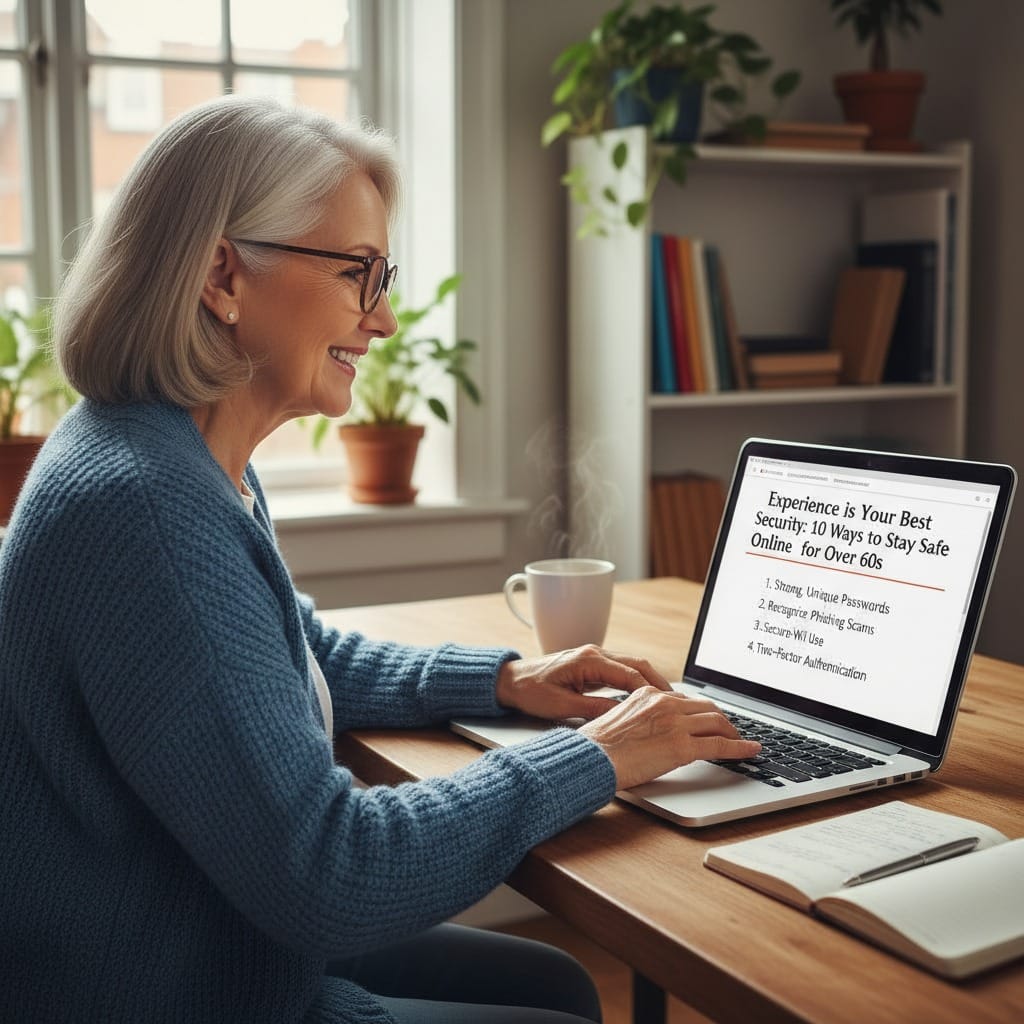
    Experience is Your Best Security: 10 Ways to Stay Safe Online

    The internet has made life easier in many ways.

    We bank, shop, and run businesses from the kitchen table.

    For many of us building new routines after 60, it’s a powerful tool for independence. But there is a downside: online scams have evolved.

    Modern scams look incredibly convincing – fake bank alerts, delivery notifications, even “investment” tips featuring familiar faces.

    The truth is, scammers don’t just target the careless; they target sensible people when they are busy or distracted.

    The good news? You don’t need to be a tech genius to stay safe.

    You just need to apply the same “slow down and verify” logic you’ve used in business, work and life for decades.

    The 10 Simple Rules of Digital Safety

    1. Slow Everything Down Scams rely on urgency. “Account locked” or “Immediate action required.” That pressure is a trap. The safest first step is to pause. If a message pushes you to act now, question why.

    2. Never Click Links in Unexpected Messages Links in texts or emails can lead to “cloned” websites. If a bank or delivery company contacts you unexpectedly, do not click. Go to the official website via your browser instead.

    3. Go to the Company Directly Never use the phone number or link provided in a suspicious message. Use the number on the back of your bank card or an official statement. One call can save a lot of heartache.

    4. Use Strong, Unique Passwords Using the same password everywhere is like using one key for your house, car, and office. If a criminal gets one, they get them all. Consider a Password Manager to keep things secure.

    5. Turn on Two-Step Verification (2SV) Most UK banks and email providers now offer this. It sends a code to your phone when you log in. It’s a small extra step that acts as a massive deadbolt on your digital door.

    6. Be Wary of “Guaranteed” Investments Fraudsters often impersonate financial advisers or celebrities. In the UK, you should always check the FCA Register before moving money. If it promises high returns with “no risk,” it’s a red flag.

    7. “Too Good to Be True” is a Warning Massive discounts or miracle offers are designed to make you act before you think. Trust that inner voice—if it feels too good to be true, it almost certainly is.

    8. Keep Your Devices Updated Those annoying “Update Now” notifications on your phone or laptop? They are your digital maintenance. They often contain the latest security patches to block new viruses.

    9. Report Suspicious Messages In the UK, you can fight back. Forward scam texts to 7726 (it spells ‘SPAM’ on a keypad) and report suspicious emails to report@phishing.gov.uk.

    It helps the authorities shut these people down.

    10. When in Doubt, Ask Someone A second opinion is a scammer’s worst enemy. A quick chat with a partner, friend, or colleague can reveal a scam instantly. Scammers want you alone; your community keeps you safe.


    The Ropho Final Thought

    The internet is a wonderful tool that has opened huge doors for us in our sixties.

    You don’t need to be paranoid; you just need to be prepared.

    Taking a beat to verify things isn’t a sign of being “out of touch”—it’s a sign of experience.

    What’s your #1 rule for staying safe online? Let’s share some collective wisdom in the comments below!

WordPress Cookie Plugin by Real Cookie Banner