
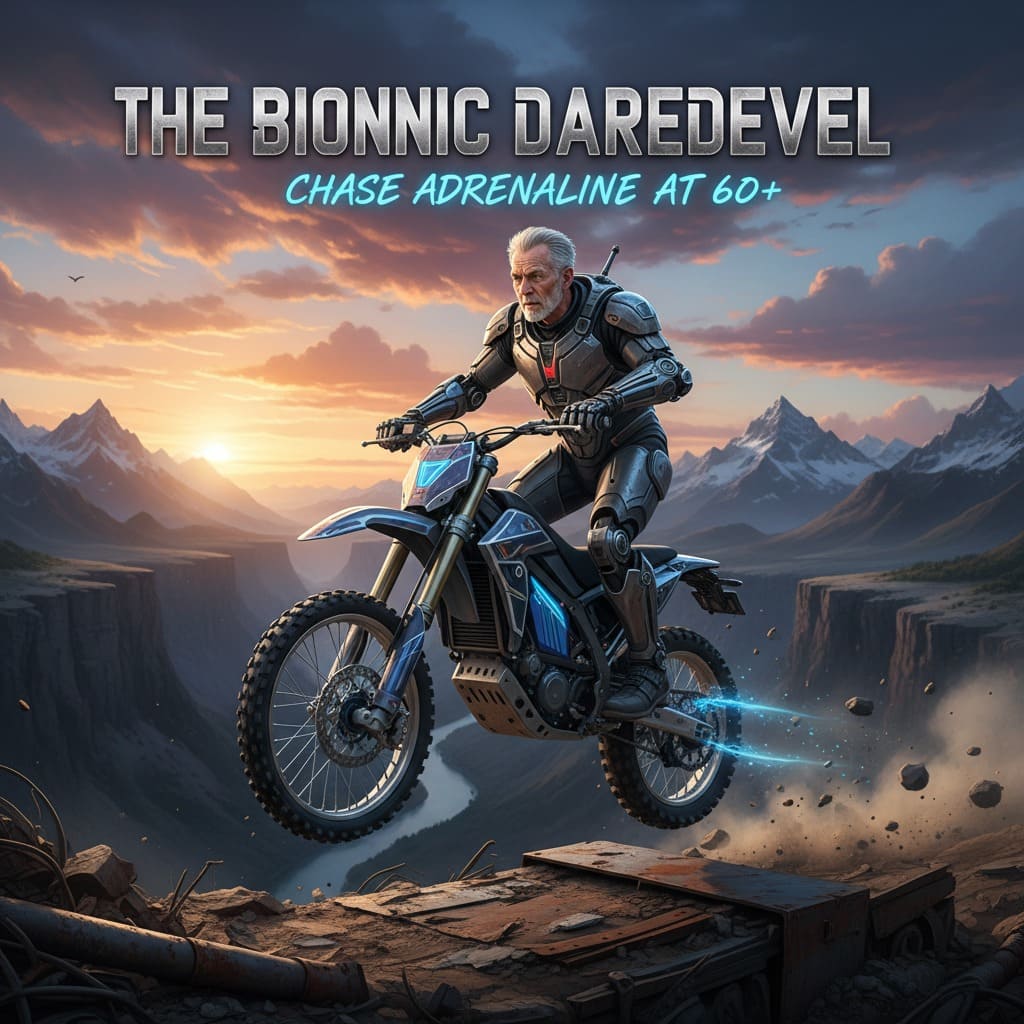
How Could I Become a Superbike Rider at 65
Crazy question right!
We were at a very special ladies 65th birthday party recently and one of our more lunatic friends a keen motorcyclist, and track racer in his earlier years, asked this question in all seriousness, admittedly after the sinking of a few alcoholic beverages.
It made me start thinking, the whole purpose of this website is to encourage people to push their limits and wherever possible follow any dreams they may still have.
My dream isn’t to ride a superbike, although I do love speed,I have been lucky in my life, I have driven fast cars, skied and many, many years ago did a toboggan run.
One thing on my to do list, is to sky dive and get back on the ski slopes. I have been thinking about the possibility of jumping for charity http://bhf.org.uk who have been a great source of help and information.
You’re 64. You’re fitter than you were at 40. You have the dream of leaning a Superbike into a corner, jumping from a plane, or hitting Class IV rapids.
Then you remember: “I have a pacemaker.” Most people think that’s the end of the conversation.
I’m here to tell you it’s just the beginning of a different strategy. If you can afford it and you’re fit enough—do it before it’s too late.
So if there are any readers who would like to join me.
Or (and I really hope there are) any of you, who already do crazy things in your sixties or older, I would love to hear and share your stories.
I am currently researching the realities, this is what I’ve found so far, I will keep you updated.
Here is how to navigate the physical, mental, and “insurance-shaped” hurdles of senior adventure.
1. Start with the “Why” (and the “Why Not?”)
Ask yourself why you want this. Is it the thrill? To show the grandkids you’re cooler than their TikTok idols? Or simply to prove that a medical device isn’t a “stop” sign? Whatever the reason, hold onto it. It’s the fuel you’ll need when the paperwork gets boring.
2. The “Pre-Flight” Physical: Science over Superstition
Adventure sports are physically demanding—balance, core strength, and reflexes matter. Before throwing a leg over a 1000cc rocket or a ski lift:
- Get a Full Check: Make sure your body is ready for the G-forces and the heart rate spikes.
- The “Old Pro” Training: Pilates (so I am told) is there any group in Hertfordshire who would take me on?.
- Swimming (which I do sometimes) work wonders for the posture and core strength needed for high-octane sports.
- The Cardiac Data: If you’re fitter than at 40, prove it. Know your Resting Heart Rate and VO2 Max. High-performance engines need data, and so do you.
3. The Elephant in the Room: The Insurance “Boss Level”
The biggest hurdle isn’t the mountain; it’s the underwriter’s spreadsheet. Insurance companies see a “60+ with a pacemaker” and want to run. Here is how to win:
- Skip the Comparison Sites: They are built for “average” people. You aren’t average. Go to Medical Travel Specialists or Adventure Brokers.
- The “Specialist Review”: Get a letter from your cardiologist stating you are “Clinically Stable” and “Cleared for High-Intensity Activity.”
- The Exclusion Pivot: If they won’t cover your heart, ask them to cover everything except the heart. You’ll be covered for the broken leg or the lost gear, which is often the bigger statistical risk anyway.
🛠️ Where to Call First (The “Non-Standard” Specialists)
If you are in the UK or looking for international coverage, skip the “Big Name” TV insurers and try these:
| Company Type | Examples | Why them? |
| Medical Specialists | Staysure / AllClear | They have built-in algorithms for pacemakers. |
| Adventure Specialists | Campbell Irvine / Dogtag | They understand that “Extreme” doesn’t always mean “Dangerous.” |
| Sports Brokers | Manning UK | They provide tailored cover for amateur racing and high-risk sports. |
💡 Pro-Tip: The “Medical Exclusion” Pivot
If a company refuses to cover your heart, ask for a “Pre-existing Condition Exclusion.” This means they cover you for broken bones, lost luggage, and air ambulance for non-cardiac issues, but they won’t pay if the pacemaker fails. For many fit 64+ -year-olds, this is the “sweet spot” that allows them to get out there legally and affordably.
4. High-Tech Protection for High-Tech Hearts
We live in the future—use the gear to your advantage.
- Mechanical Protection: If you’re worried about impacts to your device site, invest in a Pacemaker Guard (Vital Beat). It’s a specialized shield that disperses impact energy.
- Airbag Technology: Whether you are skiing or riding a Superbike, Airbag Vests are game-changers. They reduce chest and rib injury risks by over 90%.
- Electronic Aids: Modern bikes have Traction Control; modern parachutes have Automatic Activation Devices. Use every “safety net” the 21st century offers.
- Vital Beat is available in the UK, and it is widely considered the gold standard for active “bionic” athletes. They actually have a dedicated partnership with the UK charity CRY (Cardiac Risk in the Young), which makes them very reputable in the British medical and sports community.
Here is the breakdown of what you’ll need and what it costs to get it to your door in 2026.
💰 Vital Beat UK Pricing & Kits
The system works as a “Shield + Shirt” combo. The shirt has a precision-placed pocket, and the D3O shield (the “impact-reactive” part) slides inside.
Item
Est. Price (Inc. UK Shipping)
Best For…
The “Sport” Full Kit
£185 – £200 (€219)
Everything. Includes the base shield + an extra “Sport Shield” for high-impact activities like biking or rafting.
Basic Comfort Kit
£160 – £170 (€189)
Everyday protection. Includes one shirt and one D3O shield.
Extra Shirts
£85 – £95 (€99)
Spares for multi-day trips (e.g., a skiing week).
5. The “Golden Rule” of Adrenaline
Start Small, Then Go Big. Jumping straight onto a Ducati Panigale or a double-black diamond run on day one? Maybe not.
- Book Advanced Training days.
- Use Private Coaches who understand the mechanics of an older (but fit!) body.
- Build your skill first, horsepower later.
🏁 The Bottom Line
Living with a pacemaker or being “over the hill” doesn’t mean you have to stay in the valley. It means you have to be smarter, better equipped, and more persistent than the youngsters.
The goal isn’t just to add years to your life, but life to your years.
If anyone is interested I have an insurance checklist of questions they will ask including what information they will need from your doctor/cardiologist.
Leave a Reply