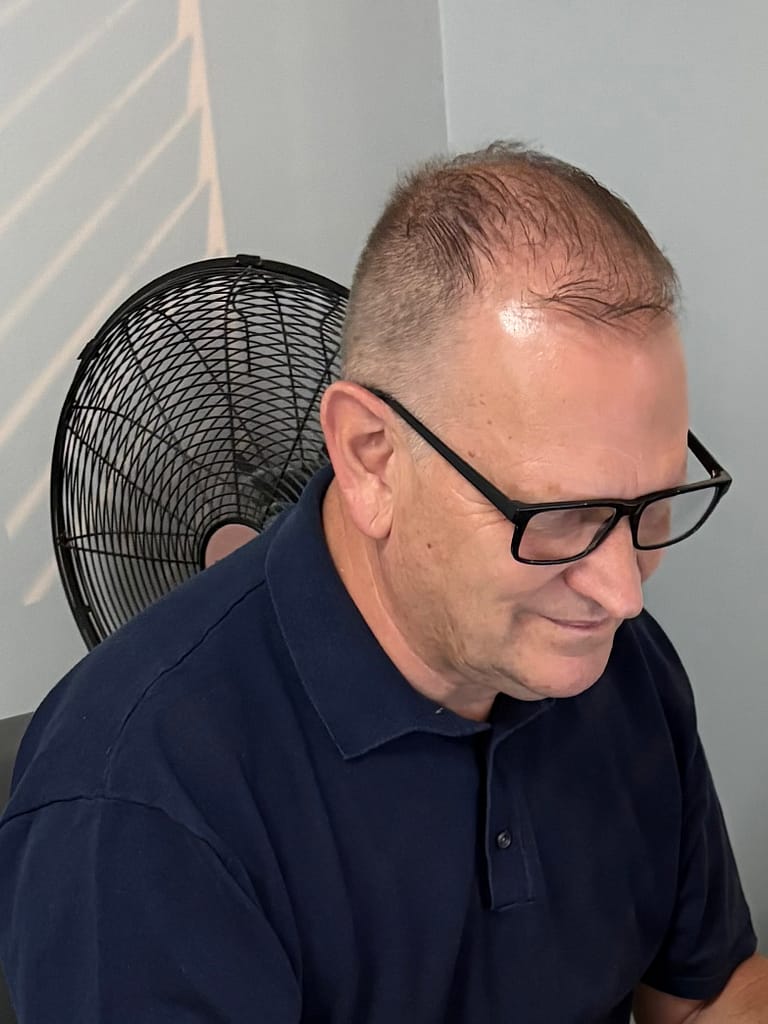
Changing Direction in Your Sixties: Why I’m Stepping Away
Those of you who have been following Ropho since I launched it back in January will know that my main line of work has, until now, been running a business advice consultancy.
When I launched Ropho, my goal was clear.
It was to create a space that helps and inspires others in their sixties to live life to the absolute full, in whatever direction they choose, by sharing the real-world experiences we’ve all built over the years.
It was my way of answering a question that has been quietly sitting with me ever since I turned 60:
What do you do when the thing you’ve been doing successfully for years is no longer the thing you want to spend your life doing?
This week, I gave my answer.
I officially informed my clients and stakeholders that I am stepping away from my consultancy practice.
I will continue to see my existing commitments through to their conclusion, but I will no longer be taking on new consultancy work.
From here, I’m going to invest my time, energy, and focus increasingly into Ropho, with the intention that by Christmas it will become my main focus.
It’s an exciting step, but it’s also a significant one.
My hope is to build Ropho into a publication that helps us navigate this golden stage of life together.
Overcoming the inevitable hurdles, making the most of the opportunities, and, above all, striving to make this our most inspiring and enjoyable decade yet.
Handling those transition conversations meant I couldn’t dedicate the time to our usual midweek piece this week.
But perhaps that was rather fitting.
Stepping back from one chapter to take a huge leap forward into another felt like the perfect backdrop for this weekend’s theme:
Embracing the future.
We each have so much experience, insight, and vitality to offer.
Getting older doesn’t mean our contribution has to get smaller.
In many ways, the experience we’ve accumulated gives us the opportunity to make better decisions, ask better questions, and perhaps be a little more selective about where we invest our time.
That’s certainly what I’m trying to do.
If Ropho can play even a small part in helping you make the most of your own next chapter, then this shift will be worth every difficult conversation.
What’s Ahead for Ropho
As we move into this next phase, Ropho will continue to evolve, but the basic rhythm that has worked so well will remain:
Mondays: Business, enterprise, and professional experience.
Wednesdays (Alternating): Health & fitness and personal finance—exploring your questions, tackling important topics, and, increasingly, bringing in guest experts.
Weekends: Pure enjoyment—travel, sport, food and drink, hobbies, local recreation, and whatever else is on your mind.
There will also be something new developing behind the scenes.
As Ropho grows, I’m going to build a library of practical resources, guides, and other useful products.
All designed to help you take ideas from the pages of Ropho and actually put them into practice.
That’s a project I’m particularly excited about.
But for now, I’m simply looking forward to having more time to write, research, experiment, and, hopefully, have a bit of fun along the way.
Thank you for being part of the journey so far.
Ropho is still very young, but it has already become something I’m genuinely excited about.
Here’s to stepping away from what we’ve always done, making room for what comes next, and writing the next chapter together.
Over to You:
Have you ever stepped away from something you’d been successful at because you realised it wasn’t where you wanted to spend the next chapter of your life?
I’d love to hear what happened in the comments below.
Welcome to the sixth and final instalment of our series on what truly makes a great B2B salesperson.
Over the past five weeks, we’ve taken a sledgehammer to a few persistent sales myths. In week one, we debunked the myth of the “gift of the gab.”
Last week, we dismantled the idea that closing isn’t the lone titan it’s made out to be.
Which brings us to the ultimate commercial question for any business leader:
How do you actually spot and hire these people?
The Commercial Reality of a Sales Hire
Let’s strip away the corporate speak. Recruiting a B2B salesperson isn’t just filling a vacancy; it’s a significant commercial investment.
When you hire a salesperson, you aren’t just committing to a base salary.
You’re committing to employer costs, vehicles, laptops, software licenses, travel expenses, management time, and—most importantly—the precious client relationships you place in their hands.
I’ve watched companies spend a small fortune making a salesperson “roadworthy” before realising they hired the wrong person in the first place:
The laptop arrives.
The phone gets connected.
The crm seat is paid for.
The product and sales training courses are booked.
The expense claims start rolling in.
And because the business has invested all this capital, management feels trapped into trying to “make it work.” The biggest saving you can make in sales development is getting the recruitment decision right in the first place.
That’s not an HR exercise—that’s pure commercial risk management.
Ditch the “Pen” Exercise—Get onto the Factory Floor
I could never bring myself to ask a candidate to “sell me this pen.” If you do that, you aren’t testing B2B capability, you’re testing theatrical performance.
High-volume, transactional consumer sales might rely on instant pitch tricks, but B2B operates on a completely different frequency.
It’s about complex ecosystems, multi-layered trust, and technical problem-solving.
Sales technique can be taught. Product features can be learned. crm discipline can be enforced. What you cannot easily teach someone is how to be genuinely interested in other people.
Instead of sitting in a sterile boardroom across a glass table, get them out of the office.
Walk them through the design room, take them onto the factory floor, or walk the warehouse together.
Then, stop evaluating their sales skills and start observing their human baseline:
Are they naturally curious? Do they notice their surroundings and ask interesting, unprompted questions about how things work?
How do they treat people? How do they interact with the shop-floor staff, the engineers, or the receptionist?
Are they active listeners? Are they genuinely processing what you say, or are they just waiting for their turn to speak?
Are they comfortable in their own skin? Can they hold a intelligent conversation without trying to dominate it?
Can they become an Extension of Your Brand
I often tell business owners that their sales staff are an extension of their product or service.
Your website is an extension of your business. Your brochure is an extension of your business. So is the person who walks through your customer’s door. In fact, the human being is considerably more critical:
A website can’t misunderstand a customer.
A brochure can’t talk over a client.
An advert can’t make a customer feel like their operational headache is unimportant.
A salesperson can do all three in twenty minutes. A technically brilliant salesperson who makes clients feel uncomfortable will actively damage your brand.
Conversely, someone who is knowledgeable, curious, listens properly, and is easy to deal with adds massive value to an otherwise standard product.
Case Study: From 12 Salespeople to 4 High Performers
I saw this play out first-hand with a technical manufacturer. They had twelve salespeople operating nationally, supported by sales managers and a sales director.
Despite all that resource and overhead, the business wasn’t making a decent profit.
The instinct in businesses like this is often to ask whether they need a different sales strategy, more training, or even more reps.
We looked at the human raw material instead.
Out of those twelve, we identified four people who had what mattered: curiosity, listening skills, genuine empathy, and the potential to become exceptional technical problem-solvers.
So, we shifted strategy. Rather than continuing to carry the cost of a large sales operation, we concentrated on those four.
Was it instant or painless? No. It took two years.
There were severance packages to deal with and tough decisions to execute.
But we paid those four what they were worth, supported them properly, and armed them with the technical and sales frameworks they needed.
The result? Sales are now booming and profitability has improved dramatically.
And here is the ultimate proof point: the business is now looking to recruit two more specialist sales engineers.
Not twelve. Not because someone decided that twelve salespeople sounded like the right-sized sales team, but because the business finally understood what it actually needed.
That is the difference between blindly buying salespeople and building a high-performing sales team.
Spot the Material, Then Arm Them
In my years managing technical sales teams, finding the balance always came down to one truth: if you don’t have the right raw material, you can’t mould the salesperson.
Your job isn’t to hire a pre-packaged corporate mouthpiece who knows all the buzzwords.
Your job is to find someone who is naturally likeable, inherently curious, and possesses the humility to listen—and then arm them.
Give them the technical foundation. Provide the market context. Back them up with solid operational systems.
Give them the sales frameworks. But above all, give them the room to apply their authentic personality to the role.
When you hire for raw character and train for technique, interviewing stops being a test of rehearsed answers—and starts becoming a genuine, enjoyable business conversation.
Frequently Asked Questions
Q: How do I evaluate technical aptitude if I’m hiring someone for “raw material” rather than past industry experience?
A: Don’t quiz them on technical specs they haven’t been taught yet. Instead, present them with a simplified, real-world customer problem during the interview and ask how they would break it down. You aren’t looking for the correct technical solution; you’re observing their logical reasoning, their willingness to ask clarifying questions, and how comfortably they admit what they don’t yet know.
Q: Isn’t taking candidates onto the factory floor or warehouse a bit informal for a executive sales role?
A: That’s precisely why it works. Boardroom interviews breed rehearsed, scripted answers. Moving a candidate through an operational environment strips away the polish and reveals their actual personality. How they engage with staff, whether they pay attention to the machinery or product flow, and how curious they are in an unfamiliar setting tells you far more about their emotional intelligence than a résumé ever will.
Q: How long should it take to “arm” a raw candidate before expecting a return on investment?
A: In complex B2B sales, expect a 3 to 6-month ramp-up period before they operate fully independently. However, you should see clear indicators of progress within the first 30 days—specifically around product literacy, active listening during shadow calls, and the quality of questions they ask internal technical teams.
Q: What is the single biggest warning sign during an interview that a candidate lacks the right raw material?
A: The biggest warning sign isn’t confidence or even a poor answer. It’s a lack of curiosity combined with an inability to listen, accept challenge or take responsibility.
We have more freedom, more experience and, hopefully, a little more time. Yet some weeks still leave us wondering where the last seven days disappeared.
A busy one. A stressful one. Running a business, writing these conversations, trying to stay fit, and keeping family happy—it all has a habit of catching up with us.
So this weekend, instead of trying to solve the world’s problems, here are three conversations that have been rattling around my head.
Perhaps they’ll start a conversation in your house, too.
Why Is It So Hard to Say No After 60?
This week reminded me just how easy it is to promise too much.
In business, late payments often start because difficult conversations are avoided.
Customers become unhappy because somebody promised something they couldn’t deliver.
Problems get pushed under the carpet until they become impossible to ignore.
Then I caught myself thinking… we do exactly the same thing in everyday life.
We promise to help, we promise to pop round, we promise to take something on, we promise to be somewhere.
Before you know it, you’ve over committed yourself, broken a few promises, and disappointed people you genuinely wanted to help.
Sometimes we say yes simply because saying no feels uncomfortable.
Maybe one of the greatest skills we can develop after 60 isn’t working harder, it’s making fewer promises and keeping every single one we make.
A well-timed “I’m sorry, I can’t” is often much kinder than a reluctant yes.
Have We Forgotten How to Relax After 60
The football season starts again this weekend.
As a Southampton supporter, I was gearing up for it when Sharon just looked at me and said, “Didn’t it only finish a couple of weeks ago?”
It certainly feels that way. The fixtures come around quicker every year.
But her comment also made me realise something else.
Hard-working people are often hopeless at relaxing.
Many of us spent forty years building careers, paying mortgages, and putting everyone else first.
Now that we finally have more freedom, we almost feel guilty enjoying it.
Should we spend money travelling?
Should we save it?
Should we help the children more?
Should we spoil ourselves instead?
There probably isn’t a single right answer.
But if we’ve worked all our lives for a little freedom, perhaps we should allow ourselves to enjoy it without feeling a pang of guilt every time we book a holiday or take a long lunch.
Life isn’t a rehearsal.
Can You Enjoy Life and Still Stay Healthy After 60?
I’ll admit to something.I enjoy a good glass of wine. I also enjoy a whisky, not necessarily in that order.
Like many parents and grandparents, I’ve always told my children that moderation matters.
Then I looked back over this past week and realised I’d had a drink every single day.Nothing excessive, just one, but it made me stop and think.
While I’m here encouraging people to strength train, walk more, and look after themselves, where does enjoying life fit into the picture?
Do we really have to give up everything we enjoy to live a healthier life?
I don’t think so. For me, it’s entirely about balance.
Then, enjoy life’s pleasures without letting them become habits that quietly take control.
Health isn’t about perfection. It’s about giving yourself the best possible chance of enjoying the years ahead.
And Finally….
My 22-year-old granddaughter had me laughing this week.
She looked around the house and said:
“Everything you’ve got is smart. The washing machine is smart. The dishwasher is smart. The TV is smart. The doorbell is smart. The only things that aren’t smart are you and me Grandad.”
Cheeky. Funny. And probably true.It did make me wonder whether we’ve become a little too dependent on technology.
Everything seems connected these days—apart from me. I still struggle to work out half the settings on these so-called smart gadgets.
Perhaps that’s not such a bad thing.Sometimes the smartest thing we can do is switch the technology off, pour a coffee—or perhaps a small glass of wine—and simply enjoy a conversation with the people who matter.
Key takeaway: Life after 60 isn’t about saying yes to everything or giving up everything you enjoy. It’s about finding the confidence to say no when you need to, making time to relax, and enjoying life’s pleasures in moderation.
So here’s this weekend’s question…
Which of these conversations struck a chord with you most?
After last week’s conversation about the importance of strength training as we age, a lot of you got in touch.
The consensus was clear: what if you simply don’t fancy lifting weights or pulling on resistance bands?
Many of you argued that pursuits like cycling, swimming, walking and running ought to count just as much.
Why force ourselves into workouts we dread when there are so many ways of staying active after 60.
It opened up a brilliant discussion.
Between debates on whether our calf muscles really are our “second heart”, how much protein we actually need in our sixties, and claims that leg strength or a daily bowl of berries hold the key to longevity, the sheer volume of health advice can feel overwhelming.
Growing up, we were spoiled. We had the family butcher and the family greengrocer right on our doorstep, so good food was simple and real.
Which brings me to a title I acquired recently…
The Blueberry Man
My great-nephew called me “The Blueberry Man” the other day.
I couldn’t even argue with him. My fridge looks like a berry farm, and I haven’t missed a daily bowl in years. But it got me thinking: is an obsession with blueberries actually justified, or is it just clever health marketing?
As it turns out, the kid was onto something.
If you had to put all your money on one fruit, blueberries make a pretty convincing case. They’re packed with anthocyanins, the natural compounds that give them their deep blue colour and are associated with heart and brain health. They’re also naturally high in fibre and relatively low in sugar.
So yes, being The Blueberry Man is a title I’ll happily wear.
But nourishing your body is only half the battle.
You’ve still got to keep the machine moving.
A “Good Walk Spoiled”?
That brings me back to the exercise debate and another ongoing disagreement in our house.
My wife firmly maintains that golf is simply a long-winded excuse to get to the nineteenth hole.
I disagree.
Looking back over the years, some of the best business relationships I’ve ever built, started over a coffee or a pint after eighteen holes.
In my mind, the nineteenth hole has probably been the most important hole of my golfing career.
As for the game itself, naysayers call it lazy. I’ll defend it all day long.
Walking several miles, negotiating uneven ground and repeatedly rotating your body through the golf swing is far more demanding than many people realise.
Everyone finds their own way to stay active.
My brother has become a real fan of Tai Chi and loves the control, balance and movement it brings.
I’ve recently been invited to join the local walking football team, although I’m not sure it’s really me.
I still dream of tearing down the wing for Southampton like my childhood hero Mick Channon—my knees, unfortunately, have a rather different opinion.
Which brings me to the garden with my grandson.
From Mick Channon to Bukayo Saka
When we’re kicking a ball around, my grandson is completely convinced he has the skill and swagger of Bukayo Saka.
Meanwhile, the second my foot touches the ball, I’m instantly transported back to my own childhood. Before I know it, I’m charging around like an absolute idiot, windmilling my arm in the air in full Mick Channon celebration mode.
To anyone watching, it probably looks ridiculous.
Two generations.
Two different footballing heroes.
One tiny patch of grass.
But my heart rate is up, my legs are working, my calf muscles are pumping and—most importantly—I’m smiling the entire time.
The Big “BUT”
If you dig through the mountain of research on healthy ageing, the message is remarkably consistent.
Any movement is good movement.
Whether it’s swimming, cycling, golf, Tai Chi, gardening, walking the dog or a chaotic kickabout with your grandchildren, your body doesn’t care what you call it.
It simply responds to movement.
But there is one massive caveat.
The big BUT.
You have to enjoy it.
If you force yourself into a gym because you think you should, there’s every chance you’ll give up after a few weeks.
If, on the other hand, you’re looking forward to meeting friends for a round of golf, getting out on your bike, walking the coast with your partner or making your grandson laugh with a hopeless Mick Channon impression, it doesn’t feel like exercise.
It just feels like life.
That’s why I’m becoming less interested in asking people, “What’s the best exercise?”
I think the better question is:
“What’s the activity you’ll still be happily doing in ten years’ time?”
Because that’s probably the one that will do you the most good.
So eat your blueberries, support your local greengrocer if you’re lucky enough to still have one, keep moving, and don’t take yourself too seriously while you’re doing it.
I’d genuinely love to know. What’s your favourite way of staying active that never feels like a chore? Are you Team Golf, Team Walking, Team Gardening… or something completely different?
Last week, we talked about asking better questions and building trust.
Most people think closing is the most important part of B2B sales.
I don’t.
In my experience, by the time you ask for the business, the sale should already have been won.
Early in my career, my sales manager used to say, “I need our best closers on this deal.”
Back then, we were trained on all the classic toolbox tricks: the Alternative Close, the Assumptive Close, the Impending Event Close. We were taught clever verbal manoeuvres designed to corner a buyer into saying yes.
Looking back, I think we were concentrating on the wrong end of the sales process.
The close isn’t where the sale is won. It’s simply where all the preparation that came before it comes together.
If you’ve applied the Look, Read, Watch, Listen habits from the start of this series, you’ve already laid the groundwork.
You climbed the Ladder of Approach (Week 3), systematically uncovering and resolving objections with each department before moving up to the next rung.
You asked deep diagnostic questions (Week 4) to quantify site constraints, operational risks, and the true cost of failure.
I’ve never believed great salespeople are brilliant closers. I believe they are brilliant preparers.
They research better. They ask better questions. They listen more carefully. They build trust and technical credibility.
By the time they ask for the business, the decision has practically been made.
Great B2B Sales Aren’t “Closed”—They Are Concluded
When the groundwork is done, the dynamic of the final meeting fundamentally changes. You aren’t trying to persuade a senior decision-maker to buy something they might not need.
Because you’ve already spoken to the people who will use or manage the solution every day, the final meeting rarely becomes a sales presentation.
It becomes a confirmation that everyone is ready to move forward.
That’s exactly what your Ladder of Approach is about.
“What a fascinating operation you have here. Having spoken to your teams across engineering, operations, and procurement, I feel we’ve thoroughly addressed the core pain points and site constraints they raised. As I understand it, they’ve shared their findings with you and recommended moving forward with our proposal.”
Notice the shift? You aren’t saying, “Let me convince you.”
You are asking, “Have we covered everything you need to move forward?”
What to Do When They Hesitate
If the answer is hesitation, do not panic. And above all, do not start offering discounts.
When technical trust has been established, price is rarely the real hurdle. A hesitation at this final stage isn’t a rejection—it’s just an unaddressed concern floating to the surface.
Resist the urge to push. Instead, ask one clean, open diagnostic question:
“It sounds like there’s still a hesitation. What’s the main hurdle standing between where we are right now and getting this project started?”
More often than not, they’ll tell you what’s really holding things up.
It might be a…..
A board sign-off.
A budget meeting next month.
Someone being on holiday.
Another department that suddenly needs to be involved.
Don’t see that as a setback. You’ve simply discovered the next conversation that needs to happen before the project can move forward.
That’s business. It happens more often than you might think.
Remember the Ladder of Approach we talked about in Week 3?
Sometimes you discover there’s one more rung you didn’t know existed.
That’s not a failed sale; it’s simply the next step.
The Sale Is Only the Start
The purchase order is not the end of the relationship; it is the absolute beginning.
Great businesses don’t just win customers—they keep them.
The salesperson who stays involved after the order, ensuring commitments are delivered and initial hiccups are resolved, is the salesperson who creates customers for life.
The best salespeople don’t “close” customers. They build enough trust that the customer simply chooses to move forward.
Looking Ahead to Week 6…
Now that we’ve deconstructed the entire sales process—from initial research to concluding the deal—we are left with a critical question for business leaders:
How do you actually hire someone who can do this?
Next week, we’re taking a fast-paced, practical and slightly controversial look at sales recruitment…and why the infamous “Sell me this pen” interview test is testing the exact opposite of what makes a great B2B salesperson.
Living well after 60 isn’t about chasing youth or pretending we’re still thirty. It’s about adapting, learning and making the most of every stage of life.
This week, three everyday conversations reminded me just how much life changes as we get older—from the face looking back at us in the mirror, to the small print on a travel insurance policy, and even planning a dinner party with friends.
Living Well After 60: The Face in the Mirror
As I’ve advanced in years, my face has started telling stories I’d rather it kept to itself.
Hair now seems determined to grow everywhere I don’t want it, while quietly disappearing from the places I wish it would stay.
My eyebrows appear to have ambitions of becoming a separate life form, while my ears and nose seem to have joined some secret hair-growing competition.
Shaving isn’t as straightforward as it once was, either. The lumps, bumps, skin tags, and the odd age spot mean a traditional wet shave requires a little more concentration than it did twenty years ago.
I still love the closeness of a razor, but there are days when common sense takes over.
That’s probably why I have a Philips, a Remington, and a Braun electric shaver sitting in the bathroom. Each seems to have its own purpose depending on what sort of face greets me in the mirror that morning.
Sharon laughs, but she’s fighting her own battles! The tweezers seem to come out more often these days for the odd stubborn chin hair that appears from nowhere, and her eyebrows also develop a mind of their own if left unattended for too long.
And, of course, there are the reminders of our younger years. Like many of my generation, I spent countless hours on golf courses convinced that sunshine was simply something to be enjoyed, not something to be protected against.
Sun cream wasn’t part of the routine back then. Today, those years have left me with a few age spots and moles that I keep a close eye on—and ask my GP to check whenever something changes.
None of this is about trying to look thirty again.
It’s simply about looking after the face that has travelled with us for more than sixty years, and making sure it stays as healthy as the rest of us.
Living Well After 60: Travel Insurance and the Small Print
Our second conversation this weekend came about after chatting with friends who recently returned from a holiday having learnt a very expensive lesson.
Like many of us, they’d bought travel insurance believing they were fully covered.
Unfortunately, when something unexpected happened, they discovered that not everything had been declared in quite the way the insurer expected.
Without going into their personal details, it was enough to make Sharon and I look at each other and say, “Perhaps we ought to check our own policy before we book anything else.”
With trips to Crete and Thailand on the horizon, our travel insurance is about to come under the microscope.
Having a pacemaker means I already know I’ll need to answer more medical questions than I did twenty years ago, but it also made me wonder what else insurers expect us to declare:
Is it just major operations?
What about high blood pressure or cholesterol tablets?
Diabetes or joint replacements?
Previous cancer treatments?
Sleep apnoea or even anxiety medication?
The list soon becomes longer than most of us expect.
It’s easy to focus on finding the cheapest premium, but the better question is: “If something happens 2,000 miles from home, will this policy really look after us?” That’s a very different question.
Over the years, I’ve used Staysure for several trips, and as someone with a pacemaker, I’ve found their medical screening process straightforward.
That doesn’t necessarily mean it’s the right insurer for everyone, but it shows there are companies specialising in older travellers and pre-existing medical conditions. Other insurers that many over-60s consider include AllClear and Saga.
The golden rule: Compare cover, not just price, and make sure the policy matches your exact medical circumstances and travel plans.
Living Well After 60: The Evolving Dinner Party
The third conversation this weekend started with something Sharon and I genuinely love—dinner parties. For many years, we’ve enjoyed sharing an evening with friends around the table. Good food, good wine, and even better conversation.
But as the years have passed, dinner parties have become slightly more complicated.
Once upon a time, the only questions were:
“How many people are coming?”
“What are we cooking?”
“Which wine shall we open?”
Now? There’s a bit more to consider:
One friend is watching their weight.
Another is managing cholesterol.
Someone else has to watch their salt intake.
Another has cut back on alcohol.
Suddenly, planning a weekend menu requires almost as much thought as planning a trip to Thailand!
We are lucky to have a wonderful group of friends. Six couples, taking turns throughout the year, each hosting one dinner party.
It’s become one of those traditions that we value more as time goes on.
Our turn is coming up after we return from Crete, so naturally my thoughts have turned towards what to cook.
And because we will have just returned from Greece, it got me thinking about Mediterranean cooking.
For years, I’ve automatically reached for Italian olive oil. Perhaps that’s because Italian food has always played a big part as my children had an Italian grandfather.
But after visiting Greece, I started wondering…
Have I been overlooking Greek olive oil?
Greece has a huge olive-growing tradition, and many Greek dishes rely on olive oil as one of their key ingredients.
Is it different from Italian olive oil?
Does it have a stronger flavour?
Is one better for cooking while another is better for dipping with bread, salads or finishing dishes?
Perhaps the real lesson is that Mediterranean cooking has always been about simple ingredients:
good olive oil
fresh vegetables
fish
lean meats
herbs
sensible portions
Which actually fits rather well with how many of us want to eat after 60.
What is your favourite dinner party dish that always gets people talking?
And are you an Italian olive oil person, or have you discovered Greek olive oil?
Looks like I’ve got another excuse to do a little research during our trip.
Ropho Reflection
Living well after 60 isn’t about expensive products, perfect health or giving up the things we enjoy.
It’s about making small adjustments as life changes.
Looking after ourselves rather than assuming getting older means simply putting up with things.
Taking the time to read the small print before we travel.
Cooking fresh, simple food that brings friends and family together.
None of those things are dramatic on their own, but together they help us enjoy life with confidence, wherever the next adventure takes us.
Now it’s over to you.
Which of this weekend’s three conversations struck a chord with you?
I’d love to hear your experiences in the comments.